




Shravan is one of the most spiritually significant months for devotees of Lord Shiva. Across India, people observe various traditions, prayers, and fasting practices during this sacred period. In Rajkot, the festive spirit of Shravan can also be experienced through special Farali Thali meals prepared with simple, traditional, and fasting-friendly ingredients. These meals offer a wonderful combination of devotion, taste, and wholesome food.
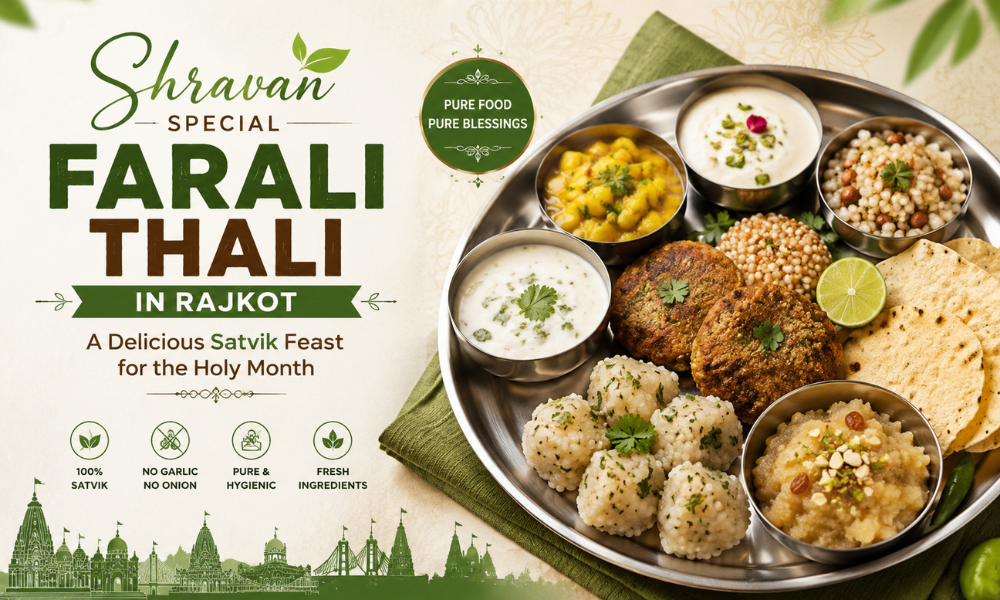
A Shravan Farali Thali is more than just a meal. It brings together several dishes that are commonly enjoyed during fasting while maintaining a satvik approach to food. From crispy Sabudana Vada and Sabudana Papad to Rajgira Poori, Sabudana Khichdi, Rajgira Kadhi, fresh fruits, and refreshing Sweet Lassi, every item adds a different flavour and texture to the traditional thali.
Why Shravan Is Special
Shravan holds a special place in the Hindu calendar and is particularly associated with Lord Shiva. Devotees often visit temples, offer prayers, perform Abhishekam, and follow fasting or dietary restrictions during this month. Mondays of Shravan, commonly known as Shravan Somvar, are especially important for many Shiva devotees.
Fasting during Shravan is traditionally connected with spiritual discipline and devotion. However, fasting does not necessarily mean avoiding food completely. Many people choose Farali foods prepared from ingredients that are traditionally permitted during fasting.
This makes a well-prepared Farali Thali an enjoyable way to maintain the spirit of fasting while having a satisfying meal.
What Makes a Farali Thali Special?
A Farali Thali generally includes dishes prepared without commonly restricted grains, pulses, onion, and garlic. Ingredients such as sabudana, rajgira, sama, potatoes, fruits, dairy products, and selected vegetables are often used.
The emphasis is usually on fresh ingredients, simple preparation, and traditional flavours. A carefully planned Farali Thali can provide variety without making the meal feel repetitive.
The Shravan special thali concept combines several such dishes into one complete meal, allowing diners to enjoy different flavours in a single sitting.
Delicious Sabudana Dishes
Sabudana is one of the most popular ingredients associated with fasting food. It is versatile and can be used to prepare several delicious dishes.
Sabudana Vada is a favourite among fasting food lovers. These crispy, golden vadas have a satisfying texture on the outside while remaining soft and flavourful inside.
Sabudana Papad adds another crunchy element to the thali. It is light, crispy, and pairs well with the other dishes.
Sabudana Khichdi is another classic Farali preparation. Made with soaked sabudana and traditional fasting-friendly ingredients, it offers a comforting combination of softness, mild spices, and nutty flavours.
The inclusion of multiple sabudana preparations gives the thali a delicious variety while staying connected to traditional fasting cuisine.
Rajgira Poori and Rajgira Kadhi
Rajgira is another important ingredient commonly used during fasting. It can be transformed into different dishes, making it a useful alternative to regular grain-based preparations.
Rajgira Poori provides a satisfying bread-like component to the Farali Thali. Its texture and taste make it a natural accompaniment to vegetable preparations and kadhi.
Rajgira Kadhi brings a smooth and mildly tangy element to the meal. Its creamy texture complements the crispiness of the pooris and other fried dishes.
Together, Rajgira Poori and Rajgira Kadhi create a comforting combination that makes the thali feel complete.
Traditional Farali Vegetables
A good Farali meal also benefits from a wholesome vegetable preparation. Lauki Ki Subzi is a simple and comforting option that works particularly well in a traditional fasting meal.
Bottle gourd has a naturally mild flavour and a soft texture when cooked properly. When prepared with suitable fasting ingredients and gentle seasoning, it adds a light and refreshing component to the thali.
Sukhi Bhaji provides another dry vegetable preparation, giving the meal additional texture and variety. Having both dry and gravy-style dishes makes the overall thali more enjoyable.
Sama: A Popular Fasting Ingredient
Sama, also known as barnyard millet, is frequently used in fasting cuisine. It can be prepared in different ways and is valued for its versatility.
Including Sama in a Farali Thali provides an alternative to conventional grain-based foods. Its mild flavour allows it to complement other dishes without overpowering them.
For people looking for variety during Shravan fasting, sama-based preparations can be a welcome addition to the traditional menu.
Sweet Lassi and Sabudana Kheer
A complete festive meal should have something refreshing and something sweet. Sweet Lassi provides a cooling dairy-based drink that pairs beautifully with the rich and savoury items in a Farali Thali.
For dessert, Sabudana Kheer offers a traditional sweet option. Made with sabudana and milk, this creamy preparation provides a gentle sweetness at the end of the meal.
The combination of Sweet Lassi and Sabudana Kheer adds balance to the thali and makes the dining experience feel more festive.
Fresh Fruits for a Refreshing Finish
Freshly cut fruits are another thoughtful addition to a Shravan Farali Thali. Fruits bring natural sweetness, freshness, and colour to the meal.
After enjoying several savoury dishes, fresh fruit can provide a lighter and refreshing finish. It also complements the satvik character of the overall meal.
Fried Mirchi for an Extra Kick
For those who enjoy a little spice, Fried Mirchi can add an exciting touch to the Farali Thali. Its spicy flavour creates a contrast with milder dishes such as Lauki Ki Subzi, Rajgira Kadhi, and Sweet Lassi.
When included in moderation, it adds personality to the traditional meal without taking away from the other flavours.
A Satvik Meal for Shravan
The concept of a satvik meal focuses on simplicity, freshness, and mindful eating. A Shravan Farali Thali reflects this approach through its selection of fasting-friendly ingredients and traditional preparations.
The menu featured for the Shravan special Farali Thali includes Fried Mirchi, Sabudana Papad, Sweet Lassi, Sabudana Vada, Sukhi Bhaji, Lauki Ki Subzi, Sabudana Khichdi, Sama, Rajgira Kadhi, Rajgira Poori, Sabudana Kheer, and Fresh Cut Fruits.
This combination offers a broad range of flavours, from spicy and savoury to creamy, sweet, and refreshing.
Enjoying Shravan in Rajkot
Rajkot is known for its love of food, and festive occasions provide an opportunity to explore traditional flavours in new ways. During Shravan, a special Farali Thali can be an excellent choice for families, devotees, and food lovers who want to enjoy a traditional fasting meal without compromising on taste.
Whether you are observing Shravan fasting, following a satvik diet during the month, or simply interested in experiencing traditional Farali cuisine, a thoughtfully prepared thali offers plenty of variety.
The combination of crispy snacks, comforting vegetables, traditional flour-based dishes, dairy preparations, sweets, and fruits makes the meal both satisfying and festive.
A Delicious Way to Celebrate the Holy Month
Shravan is a time for devotion, reflection, traditions, and togetherness. Food also becomes an important part of the festive experience, especially when traditional recipes are prepared with care and enjoyed with family and loved ones.
A Shravan Special Farali Thali in Rajkot brings together the essence of traditional fasting cuisine in one wholesome meal. With dishes such as Sabudana Vada, Sabudana Khichdi, Rajgira Poori, Rajgira Kadhi, Lauki Ki Subzi, Sweet Lassi, Sabudana Kheer, and fresh fruits, the thali offers something for every taste.
For anyone looking to celebrate Shravan through traditional flavours, this type of Farali Thali provides a delicious balance of satvik food, festive variety, and culinary tradition. It is a reminder that fasting food can be simple yet flavourful, traditional yet enjoyable, and deeply connected with the spirit of the sacred month.
May this Shravan bring peace, happiness, good health, and prosperity to everyone. Har Har Mahadev!