





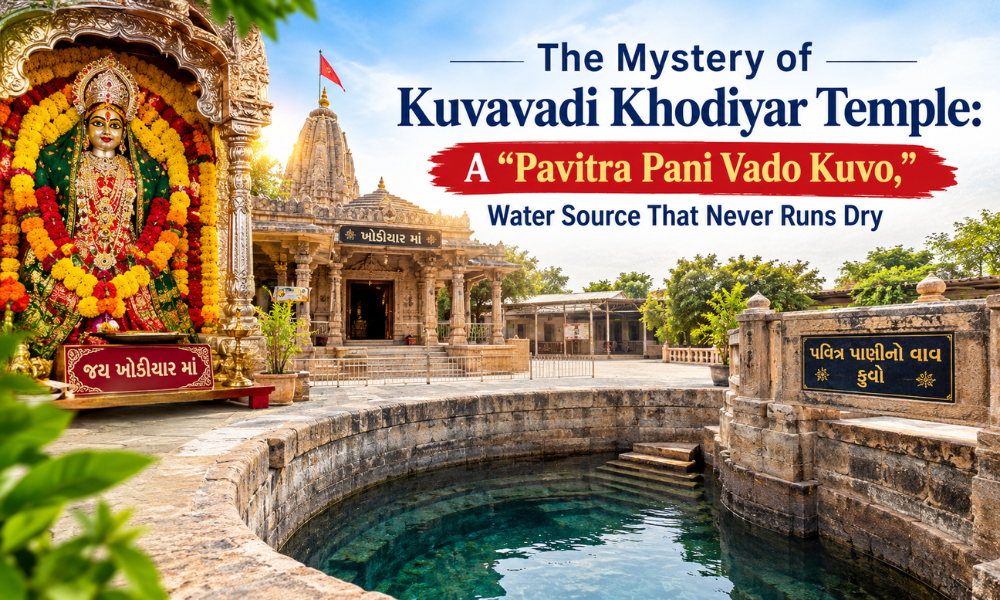
Gujarat is home to numerous temples that preserve centuries of faith, devotion, and fascinating traditions. Among these spiritual places, Kuvavadi Khodiyar Temple stands out for its unique association with a sacred well known as “Pavitra Pani Vado Kuvo” — a well whose water is believed by devotees to never run dry. Located in the Milpara area, the temple has become an important center of faith for devotees of Khodiyar Mata. Its sacred water, religious traditions, and long-standing history make it a distinctive spiritual landmark for people seeking blessings and divine connection.
The temple is not only a place of worship but also a symbol of the deep-rooted religious beliefs that continue to shape Gujarat’s cultural identity.
The History of Kuvavadi Khodiyar Temple
According to the Gujarati newspaper report, the temple’s history dates back to the year 1875, when a group of devotees belonging to the Kuvavadi community established the Khodiyar shrine in the Milpara area. Over time, the temple developed into a respected religious destination where devotees gathered to worship Khodiyar Mata and participate in traditional celebrations.
The temple’s growing popularity is closely connected with the story of its sacred well. Known locally as “Pavitra Pani Vado Kuvo,” the well has become one of the most remarkable features associated with the shrine. Its reputation has attracted devotees who visit the temple not only to seek blessings but also to learn about the well’s unusual history.
For generations, the temple has preserved its spiritual significance through worship, community participation, and religious observances. Its continued presence reflects the lasting relationship between local traditions and the faith of devotees.
Pavitra Pani Vado Kuvo: The Sacred Water Source
The most fascinating feature of Kuvavadi Khodiyar Temple is its sacred water source. The name “Pavitra Pani Vado Kuvo” translates roughly to “the well with sacred water.” According to local belief, the well’s water never dries up, making it an important part of the temple’s identity.
For devotees, the well represents more than a natural source of water. It is associated with faith, purity, and the blessings of Khodiyar Mata. Visitors regard the water with religious respect, and its presence has helped strengthen the temple’s reputation over the years.
The Gujarati newspaper report describes the well as a distinctive feature of the temple and highlights the belief that its water remains available even during different seasons. Although the reasons behind the water source’s persistence would require scientific investigation to establish, its religious significance remains an important part of the local community’s tradition.
The well’s story also demonstrates how natural features can become closely connected with spiritual beliefs. Across India, wells, ponds, rivers, and springs have long played important roles in religious life. At Kuvavadi Khodiyar Temple, the sacred well continues this tradition by bringing together nature, devotion, and local heritage.
A Temple Filled with Faith and Devotion
Khodiyar Mata holds a special place in the religious traditions of Gujarat. Devotees visit her temples to offer prayers, seek blessings, and express gratitude. At Kuvavadi Khodiyar Temple, the sacred well adds a distinctive dimension to this spiritual experience.
The temple’s atmosphere reflects the devotion of the people who visit throughout the year. Worshippers come to pray, participate in rituals, and maintain a connection with traditions passed down through generations.
The shrine’s importance is not limited to individual worship. It also serves as a gathering place for the local community, where religious celebrations bring people together. Such temples help preserve cultural practices while providing a shared space for faith and fellowship.
The story of the sacred well further strengthens this connection. For many devotees, its continued presence is a reminder of the divine protection and blessings they associate with Khodiyar Mata.
Navratri Celebrations and Khodiyar Mata Worship
Navratri is one of the most significant festivals dedicated to the worship of the Divine Feminine in Gujarat. During these nine days, devotees offer prayers to the Goddess, participate in religious ceremonies, and celebrate the victory of good over evil.
Kuvavadi Khodiyar Temple holds particular importance for devotees during this festive period. According to the newspaper report, special religious activities and celebrations take place at the temple during Navratri. Devotees gather to worship Mataji, seek blessings, and participate in the temple’s traditional observances.
The celebrations strengthen the temple’s role as a centre of community devotion. Families and worshippers come together to maintain religious customs and pass their faith on to younger generations.
For devotees, visiting the temple during Navratri is an opportunity to experience the spiritual atmosphere of the shrine and pay respect to Khodiyar Mata. The sacred well remains an important part of the temple’s identity throughout these celebrations.
The Cultural Significance of the Sacred Well
The story of “Pavitra Pani Vado Kuvo” is an example of how religious landmarks become part of a region’s cultural heritage. Over time, stories associated with temples and sacred water sources are shared among families and communities, preserving local memories and traditions.
At Kuvavadi Khodiyar Temple, the well represents the relationship between faith and the natural environment. Its reputation has become part of the shrine’s identity, helping distinguish it from other religious destinations.
Preserving such places requires care for the temple premises, respect for religious customs, and responsible management of the water source. Maintaining cleanliness around the well is especially important to protect its surroundings and ensure that future generations can continue to appreciate the site.
The temple’s history also highlights the role of local communities in protecting religious heritage. Through worship, festivals, and continued participation, devotees help keep these traditions alive.
Visiting Kuvavadi Khodiyar Temple
Visitors interested in Gujarat’s religious heritage may find Kuvavadi Khodiyar Temple a meaningful place to explore. The shrine offers an opportunity to learn about Khodiyar Mata worship, local religious customs, and the story of the sacred well.
Those planning a visit should respect temple traditions, follow local guidance regarding rituals, and avoid disturbing the well or its surroundings. Visitors should also remember that the belief that the well never runs dry is a local religious tradition; its year-round water levels and geological characteristics would need independent verification.
Experiencing the temple respectfully allows visitors to appreciate both its spiritual importance and its place in the community’s cultural history.
Final Thoughts
The mystery of Kuvavadi Khodiyar Temple lies in the remarkable story of “Pavitra Pani Vado Kuvo,” the sacred well believed by devotees to never run dry. With a history reportedly dating back to 1875, the temple continues to hold a special place in the religious life of the Milpara community.
From its association with Khodiyar Mata to its Navratri celebrations and distinctive water source, the shrine reflects Gujarat’s enduring traditions of faith and devotion. Whether viewed through the lens of religious belief, local history, or cultural heritage, Kuvavadi Khodiyar Temple remains a fascinating example of how a sacred place can preserve the stories and values of a community across generations.