





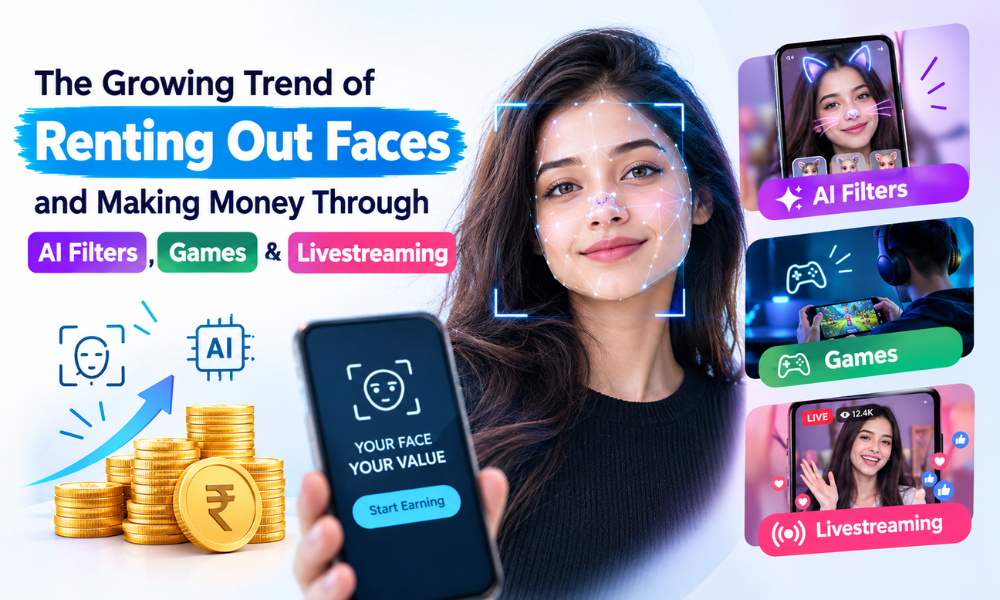
The digital world is changing the way people create content, build online identities, and earn money. One of the more unusual trends gaining attention is the idea of “renting out your face” for use in AI filters, games, livestreaming, virtual characters, and other digital experiences. Instead of earning only from traditional photoshoots, advertisements, or social media sponsorships, individuals can potentially license their facial appearance for digital projects and receive payment for its use.
This emerging concept sits at the intersection of artificial intelligence, gaming, creator economies, virtual influencers, and livestreaming. As companies look for realistic digital characters and creators search for new income sources, a person’s face can become a type of digital asset. However, the opportunity also comes with important questions about privacy, consent, ownership, and how facial data is stored and used.
What Does “Renting Out Your Face” Mean?
Renting out your face does not necessarily mean physically appearing in an advertisement or film. In many cases, it can involve allowing a company, developer, creator, or platform to use your facial appearance to create a digital character, filter, avatar, game character, or other visual content.
For example, a person may provide photographs, video footage, or facial expressions that are used to create a digital model. Depending on the agreement, that model could appear in a mobile game, social media filter, virtual experience, livestreaming application, or promotional campaign.
The payment structure can vary. Some opportunities may involve a one-time fee, while others may offer licensing payments based on usage, duration, or the popularity of the digital product.
Why Is This Trend Growing?
Artificial intelligence has made it easier to create realistic digital characters. Previously, developing a convincing digital human could require expensive modelling, animation, photography, and visual-effects work. Today, AI-powered tools can significantly simplify parts of this process.
At the same time, online platforms are increasingly focused on personalization. Users enjoy filters that change their appearance, interactive avatars, virtual characters, and experiences that feel more realistic. Businesses and game developers therefore have an incentive to create diverse and engaging digital faces.
The creator economy is another important factor. People are already monetizing their voices, photographs, videos, skills, and personalities online. The concept of licensing facial appearance can be viewed as another extension of this digital economy.
AI Filters Create New Opportunities
AI filters have become a major part of social media culture. From transforming facial expressions to changing hairstyles, adding virtual makeup, creating fantasy characters, or converting users into different artistic styles, filters can turn an ordinary selfie into interactive content.
Some filters require large collections of facial data or realistic reference material to deliver convincing results. This creates opportunities for people whose appearances may be licensed for developing or testing digital experiences.
For creators, the potential benefit is that their contribution can be separated from the traditional influencer model. They may not need millions of followers to participate in every opportunity. Instead, their appearance itself may have value for a particular digital project.
However, creators should understand exactly what they are licensing. A contract that permits a face to be used for one filter is very different from an agreement that gives broad rights to use the same likeness across multiple products.
Gaming Is Expanding the Market for Digital Faces
The gaming industry is another area where realistic faces can have commercial value. Modern games increasingly use detailed characters with realistic facial expressions and appearances.
Game developers may use actors, models, or other individuals as references for digital characters. Their facial appearance can contribute to the design of a character, while motion capture and facial-expression technology can help create more believable interactions.
Indie developers and smaller studios are also gaining access to AI-powered creative tools that were once available mainly to large production companies. This could increase demand for digital character assets.
For people participating in these projects, the key issue is understanding whether they are being paid for a specific performance, a likeness license, or broader rights to their facial identity.
Livestreaming and Virtual Creators
Livestreaming has also changed the relationship between a creator and their digital identity. Virtual streamers can use animated avatars instead of appearing directly on camera. AI technology can make these experiences more interactive by connecting facial movements, expressions, voices, and virtual characters.
This creates another possible use for licensed faces. A creator or performer could potentially provide their appearance for a virtual character while someone else manages the digital performance.
In some cases, the person behind the face may never appear publicly in the final content. Their likeness could become part of a virtual personality, game character, advertising experience, or interactive livestream.
This raises an interesting question: Who owns a digital version of a person’s face?
The answer depends heavily on contracts, local laws, platform policies, and the exact technology being used.
The Importance of Consent and Facial Data Privacy
While the earning potential sounds attractive, people should be careful before providing photographs, videos, scans, or other facial information to a company.
A face is not simply an ordinary photograph. Facial information can be used as biometric data in certain contexts, and biometric information can raise significant privacy concerns.
Before agreeing to a licensing arrangement, individuals should check:
- How their facial data will be collected
- Where the data will be stored
- How long the company can use it
- Which products can use their likeness
- Whether the rights are exclusive or non-exclusive
- Whether the company can modify the digital representation
- Whether the likeness can be sublicensed to other companies
- What happens after the contract ends
- Whether the individual can request deletion of source data
- How payment will be calculated
A simple-looking “AI face opportunity” can involve much broader rights than expected, so reading the terms carefully is essential.
Deepfakes Make the Issue More Complicated
The rise of AI-generated content has also created concerns about unauthorized face usage. A person’s face can potentially be manipulated into videos, images, advertisements, or other content without their permission.
This is why legitimate licensing and explicit consent are becoming increasingly important. People should distinguish between voluntarily licensing their likeness and having their face copied or manipulated without permission.
Platforms, technology companies, governments, and creators are increasingly discussing ways to protect individuals from unauthorized digital replicas. As technology becomes more advanced, establishing clear rules around digital identity will become even more important.
A New Type of Digital Asset
The idea of renting out a face reflects a larger transformation in the internet economy. Digital assets are no longer limited to websites, photographs, videos, usernames, or intellectual property. A person’s appearance, voice, personality, and digital identity can also become commercially valuable.
For creators, this could open another income stream. For developers, it could provide access to realistic and diverse digital characters. For businesses, licensed likenesses can help create more engaging experiences.
But the value of this market will ultimately depend on trust. People need confidence that their identity will not be used beyond the agreement they accepted.
What the Future Could Look Like
As AI, gaming, augmented reality, virtual reality, and livestreaming continue to develop, demand for realistic digital humans is likely to increase. We may see more marketplaces where people can license their appearance, voice, expressions, or digital avatars for specific projects.
Future contracts could become more detailed, allowing individuals to choose exactly where and how their digital identity can be used. For example, someone might license their face for a game for six months but prohibit political advertising, adult content, or unrelated commercial applications.
This could turn digital likeness licensing into a more structured part of the creator economy.
Conclusion
The growing trend of renting out faces through AI filters, games, and livestreaming represents a fascinating development in the digital economy. What was once simply a person’s physical appearance can now potentially become part of an AI-generated character, interactive filter, virtual influencer, or gaming experience.
For individuals, it may offer a new way to monetize their likeness without becoming traditional influencers. For technology companies and developers, it can provide new possibilities for creating realistic digital experiences.
However, opportunity should always be balanced with caution. Before sharing facial images or biometric information, people should understand exactly what they are agreeing to and who will control the resulting digital identity.
As AI continues to blur the line between the real and virtual worlds, your face may become more than an image—it could become a licensed digital asset.