




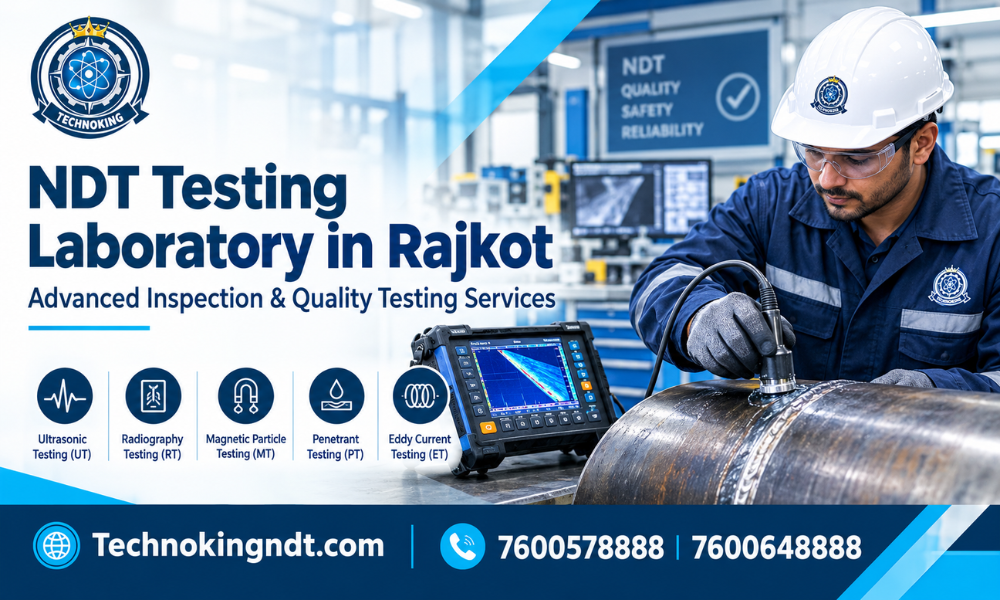
In today’s industrial world, maintaining product quality, structural integrity, and operational safety is essential for businesses across manufacturing, engineering, construction, and other industrial sectors. Non-Destructive Testing (NDT) plays a vital role in identifying defects, evaluating material conditions, and ensuring that components meet the required quality standards without causing damage to the tested materials.
Rajkot is an important industrial hub in Gujarat, known for its engineering units, foundries, casting manufacturers, automotive component suppliers, and manufacturing businesses. These industries require effective inspection and testing methods to ensure their products are suitable for their intended applications. A professional NDT Testing Lab in Rajkot can support these requirements by providing inspection solutions that help identify internal and surface defects before they become serious problems.
Understanding Non-Destructive Testing (NDT)
Non-Destructive Testing is a group of inspection techniques used to examine materials, components, welds, and structures without damaging their usability. Unlike destructive testing methods, NDT allows products to be inspected while preserving their original condition. This makes it a valuable approach for quality control, preventive maintenance, manufacturing inspection, and safety evaluation.
NDT methods help detect cracks, corrosion, porosity, inclusions, discontinuities, and other imperfections that may affect the performance of a component. The appropriate testing technique depends on the material, component design, inspection requirements, and applicable standards.
A dependable NDT Testing Laboratory in Rajkot can help industrial businesses select suitable testing methods based on their specific requirements and inspection objectives.
Importance of NDT Testing Services in Rajkot
Industrial components often operate under demanding conditions, including pressure, vibration, temperature variations, and mechanical stress. Even a small defect can affect product performance, reduce service life, or lead to equipment failure. Regular inspection helps manufacturers identify potential issues before components are installed or used in critical applications.
Professional NDT Testing Services in Rajkot offer several important benefits:
- Early Defect Detection: Identify surface and internal imperfections before they affect component performance.
- Improved Product Quality: Support consistent manufacturing quality through systematic inspection.
- Enhanced Safety: Help assess the integrity of components used in industrial and structural applications.
- Reduced Material Waste: Detect defects without unnecessarily damaging usable products.
- Cost Control: Help reduce the risk of expensive repairs, rework, and unexpected equipment downtime.
- Quality Assurance: Provide inspection findings that support quality-control procedures and applicable acceptance criteria.
By integrating suitable NDT methods into their quality-management processes, businesses can improve confidence in their products and manufacturing operations.
Common NDT Methods for Industrial Inspection
Different materials and components require different testing techniques. An experienced testing provider can recommend an appropriate method after considering the component’s material, shape, thickness, accessibility, and the type of defect being investigated. Choosing reliable NDT Services in Rajkot helps industries improve product reliability, reduce operational risks, and maintain consistent quality throughout their production processes.
- Ultrasonic Testing (UT)
Ultrasonic Testing uses high-frequency sound waves to examine material conditions and identify certain internal discontinuities. It is commonly used for inspecting metal components, welds, plates, and other industrial products. Depending on the technique and application, UT can help locate internal flaws and measure material thickness.
This method is valuable when internal inspection is required without cutting or damaging the component.
- Magnetic Particle Testing (MPT)
Magnetic Particle Testing is used to identify surface and near-surface discontinuities in suitable ferromagnetic materials. The component is magnetised, and magnetic particles are applied to reveal indications associated with defects.
MPT is frequently used for inspecting steel components, welded joints, castings, forgings, and other ferromagnetic parts where surface integrity is important.
- Liquid Penetrant Testing (LPT)
Liquid Penetrant Testing helps identify surface-breaking defects in non-porous materials. A penetrant liquid enters small openings on the component’s surface, and a developer helps make relevant indications visible.
This method can be suitable for a variety of metallic and non-metallic materials, provided their surface characteristics and application requirements are appropriate.
- Radiographic Testing (RT)
Radiographic Testing uses X-rays or gamma rays to examine internal features of materials and components. It can reveal certain internal discontinuities, including porosity and inclusions, depending on the component and inspection conditions.
Radiographic testing requires appropriate radiation-safety controls, qualified personnel, and suitable procedures.
- Hardness Testing
Hardness Testing evaluates a material’s resistance to indentation or deformation using an appropriate testing method. It can help assess material consistency and verify whether a component meets specified hardness requirements.
The testing method and acceptance limits depend on the material, component geometry, and applicable specifications.
- Other Specialised Inspection Methods
Depending on project requirements, industrial inspection may also involve additional NDT techniques, thickness measurements, weld inspection, or specialised evaluation procedures. The availability and suitability of each service should be confirmed with the testing provider.
Industries That Benefit from NDT Services
NDT techniques are widely used across industries where material quality, reliability, and safety are important. In Rajkot, these services can be particularly useful for:
- Foundries and Casting Manufacturers: Inspection of cast components for relevant surface and internal discontinuities.
- Engineering Industries: Evaluation of manufactured parts and industrial equipment.
- Automotive Component Manufacturers: Inspection of selected components used in automotive applications.
- Fabrication and Welding Units: Examination of welds and fabricated structures.
- Construction and Infrastructure: Inspection of suitable structural components and welded connections.
- Machinery Manufacturers: Quality checks for machine parts and equipment components.
- Industrial Maintenance Teams: Assessment of components during maintenance and condition-monitoring activities.
The appropriate testing method depends on the industry’s technical requirements, the component being inspected, and the relevant specifications.
How to Choose the Right NDT Testing Lab in Rajkot
Selecting a suitable testing provider is an important step in maintaining manufacturing quality and operational reliability. Businesses should evaluate the laboratory’s technical capabilities and ability to meet their inspection requirements.
Consider the following factors when choosing an NDT Testing Lab in Rajkot:
Technical Expertise: Check whether the provider has experience with your material types, component designs, and inspection applications.
Qualified Personnel: Confirm that personnel have appropriate qualifications and certifications for the specific testing methods being performed.
Testing Equipment: Ensure the available equipment is suitable for the required inspection scope and is properly maintained and calibrated where applicable.
Testing Procedures: Ask whether inspections follow suitable written procedures and applicable industry standards.
Clear Reporting: Look for inspection reports that clearly document the method used, relevant findings, limitations, and applicable acceptance criteria.
Quality and Safety Practices: Evaluate the provider’s quality-management procedures and safety practices, particularly for specialised inspections such as radiographic testing.
Turnaround Time: Discuss project schedules, sample quantities, site requirements, and reporting timelines before beginning the work.
These considerations can help businesses choose a testing partner that supports their quality objectives and operational needs.
Role of NDT in Quality Assurance and Preventive Maintenance
Quality assurance is not limited to checking finished products. It also involves identifying possible problems during manufacturing, fabrication, installation, and maintenance. NDT can form an important part of this process by helping businesses evaluate components at appropriate stages of their lifecycle.
For example, manufacturers may use NDT to inspect selected castings before machining, examine welds after fabrication, or assess components during planned maintenance. Inspection results can help quality teams determine whether additional evaluation, repair, replacement, or acceptance is appropriate under the applicable requirements.
However, NDT does not guarantee that every possible defect will be detected. Results depend on the testing method, procedure, equipment, material properties, inspection conditions, and personnel competence. Therefore, the testing plan should be designed around the component’s actual risks and requirements.
Conclusion
Choosing appropriate inspection methods is essential for businesses that prioritise product quality, manufacturing consistency, and industrial safety. Professional NDT Services in Rajkot can help manufacturers and engineering companies identify relevant material discontinuities, evaluate component conditions, and support quality-control decisions without unnecessarily damaging the tested products.
Whether a business needs ultrasonic testing, magnetic particle testing, liquid penetrant testing, radiographic testing, or another suitable inspection technique, selecting the right testing provider is an important part of achieving reliable results. A capable NDT Testing Laboratory in Rajkot can contribute to better inspection practices, improved product confidence, and more effective quality assurance.
By understanding the available testing methods and evaluating laboratory capabilities carefully, businesses can make informed decisions about their inspection requirements and maintain stronger quality standards across their operations.