
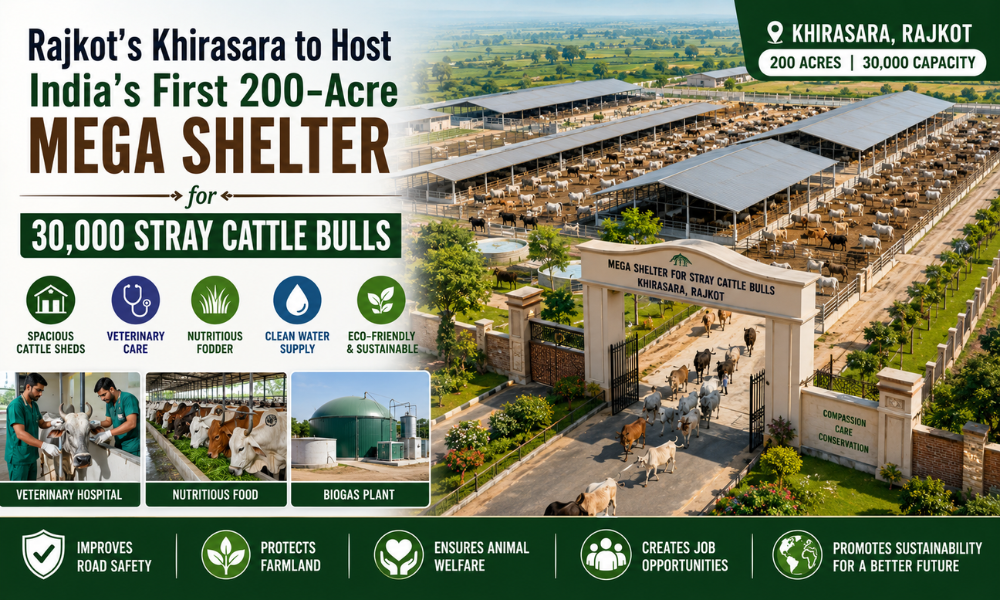
Rajkot is set to witness a landmark initiative in animal welfare and sustainable livestock management with the development of India’s first 200-acre mega shelter dedicated to 30,000 stray cattle bulls at Khirasara. This ambitious project aims to provide a safe and well-managed sanctuary for stray bulls while addressing one of the growing challenges faced by urban and rural communities across Gujarat.
The proposed mega shelter is expected to become a model for humane animal care, environmental sustainability, and community participation. By creating a dedicated space for stray cattle, the initiative seeks to improve road safety, reduce agricultural losses, and ensure proper care for animals that often roam freely in cities and villages.
A Landmark Initiative in Animal Welfare
Stray cattle have become a significant concern in many parts of India. Bulls wandering on highways, city roads, marketplaces, and residential areas often lead to traffic congestion, road accidents, and damage to crops. Managing these animals in a humane and organized manner has become an important priority for local authorities and social organizations.
The Khirasara Mega Shelter is envisioned as a long-term solution that prioritizes both animal welfare and public safety. Spread across nearly 200 acres, the shelter will have the capacity to house approximately 30,000 stray bulls, making it one of the largest facilities of its kind in the country.
The project reflects Gujarat’s continued emphasis on compassionate animal care while supporting better urban planning and rural development.
Why the Mega Shelter is Needed ?
Rapid urbanization, expanding road networks, and changing agricultural practices have contributed to the increasing number of stray cattle in many regions. Bulls that are no longer used for traditional farming often end up on public roads in search of food and water.
These animals face numerous risks, including:
- Road accidents
- Injuries
- Lack of food and clean water
- Health problems
- Exposure to extreme weather
- Conflicts with motorists and farmers
A dedicated shelter offers a safer and more organized environment where these animals can receive proper care throughout their lives.
Planned Facilities at the Shelter
The Khirasara Mega Shelter is expected to feature modern infrastructure designed to ensure the health and well-being of thousands of animals.
The proposed facilities may include:
- Spacious grazing areas
- Large cattle sheds
- Veterinary hospitals
- Isolation wards for sick animals
- Clean drinking water systems
- Nutritious fodder storage
- Feeding zones
- Waste management facilities
- Biogas plants
- Solar energy systems
- Staff quarters
- Administrative offices
- Security and monitoring systems
The objective is to create a self-sustaining ecosystem where animal welfare and environmental conservation go hand in hand.
Improving Road Safety
One of the biggest advantages of the project will be improved road safety.
Stray bulls frequently wander onto highways and busy city roads, creating dangerous situations for motorists, pedestrians, and cyclists. Accidents involving stray cattle often result in serious injuries and property damage.
By relocating thousands of stray bulls to a dedicated shelter, authorities hope to significantly reduce traffic hazards while ensuring that the animals remain protected and well cared for.
Safer roads will benefit commuters, transport operators, emergency services, and visitors traveling through the Rajkot region.
Supporting Farmers
Farmers are among those who will benefit greatly from this initiative.
Stray bulls often enter agricultural fields, damaging standing crops and causing financial losses. Protecting crops from roaming animals requires additional fencing, labor, and maintenance, increasing farming costs.
With a proper shelter in place, crop damage can be minimized, allowing farmers to focus on agricultural productivity without constant concern about stray cattle entering their fields.
This initiative is expected to contribute positively to rural livelihoods and agricultural sustainability.
Veterinary Care and Animal Health
Providing quality healthcare is expected to be one of the major priorities of the mega shelter.
Qualified veterinarians and trained animal care staff will monitor the health of the animals through regular medical examinations, vaccinations, disease prevention programs, and emergency treatment.
Proper nutrition, clean water, and hygienic living conditions will further improve the overall well-being of the cattle.
The shelter may also support animal identification, health record management, and scientific livestock care practices.
Sustainable Environmental Management
The project is expected to incorporate environmentally friendly practices that support sustainable development.
Organic cattle waste can be processed into:
- Biogas for energy generation
- Organic manure for agriculture
- Compost for horticulture
- Renewable energy solutions
Solar panels and rainwater harvesting systems may further reduce the shelter’s environmental footprint while lowering operational costs.
Such integrated resource management demonstrates how animal welfare projects can also contribute to environmental conservation.
Employment and Local Development
A project of this scale has the potential to generate significant employment opportunities for the local community.
Jobs may be created in areas such as:
- Veterinary services
- Animal caretaking
- Security
- Administration
- Maintenance
- Fodder management
- Transportation
- Waste processing
- Facility operations
Local businesses supplying fodder, medicines, equipment, and maintenance services may also benefit from the shelter’s ongoing requirements.
The project could become an important contributor to the regional economy while promoting responsible livestock management.
A Model for Other States
If successfully implemented, the Khirasara Mega Shelter could serve as a model for other Indian states facing similar challenges with stray cattle.
Many cities across the country continue to struggle with balancing animal welfare and public safety. Establishing scientifically managed large-scale shelters can provide a practical and compassionate solution that benefits both communities and animals.
The project may encourage other municipalities to adopt similar initiatives tailored to local needs.
Community Participation
Public participation will play an important role in the long-term success of the shelter.
Citizens, volunteers, charitable organizations, animal welfare groups, and local communities can contribute through:
- Volunteering
- Donations
- Fodder support
- Animal welfare awareness
- Veterinary assistance
- Environmental initiatives
Collective responsibility and community involvement will strengthen the shelter’s mission while promoting compassion toward animals.
Balancing Tradition and Modern Management
Cattle have long held a respected place in Indian culture and rural life. Caring for stray animals reflects values of compassion, responsibility, and coexistence.
The Khirasara project combines these traditional values with modern management practices by using scientific planning, veterinary care, sustainable infrastructure, and organized administration.
This balanced approach demonstrates how cultural heritage and contemporary solutions can work together for the benefit of society.
A Vision for the Future
The proposed mega shelter represents more than just a large animal facility—it symbolizes a forward-looking vision for humane urban development.
As cities continue to expand, innovative solutions will be necessary to manage challenges involving livestock, transportation, environmental sustainability, and public safety.
By investing in organized infrastructure for stray cattle management, Rajkot is taking an important step toward creating safer roads, healthier animals, stronger rural communities, and improved environmental outcomes.
Conclusion
The proposed 200-acre Mega Shelter at Khirasara marks a significant milestone in India’s efforts to promote animal welfare and responsible livestock management. With the capacity to accommodate 30,000 stray cattle bulls, the project has the potential to transform how stray cattle are cared for while addressing issues related to road safety, crop protection, and urban planning.
Beyond providing shelter, the initiative reflects a broader commitment to compassion, sustainability, and community welfare. By integrating modern veterinary care, eco-friendly infrastructure, and efficient management practices, the Khirasara Mega Shelter could become a national benchmark for humane and sustainable stray cattle management.
As Rajkot moves forward with this visionary project, it offers an inspiring example of how thoughtful planning and collective responsibility can create lasting benefits for animals, people, and the environment alike.