




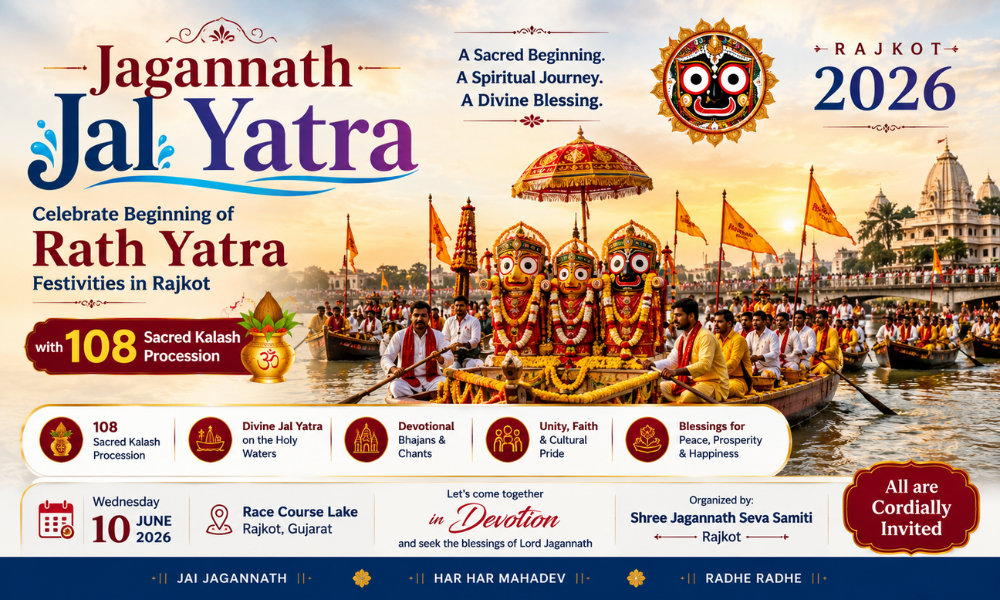
The arrival of the holy month of Ashadha marks the beginning of one of India’s most revered religious celebrations—the Jagannath Rath Yatra. Before the magnificent chariots carrying Lord Jagannath, Lord Balabhadra, and Devi Subhadra roll through the streets, an equally significant spiritual tradition takes place: the Jagannath Jal Yatra. In Rajkot, this sacred event was celebrated with immense devotion and grandeur in 2026, officially inaugurating the Rath Yatra festivities.
This year’s Jal Yatra witnessed the participation of 108 women carrying sacred Kalash (holy water pots) on their heads, accompanied by saints, devotees, traditional musicians, and hundreds of faithful followers. The spiritual procession transformed the city into a vibrant celebration of faith, culture, and devotion while reinforcing centuries-old traditions associated with Lord Jagannath.
A Sacred Beginning to Rath Yatra Celebrations
The Jagannath Jal Yatra is considered one of the most auspicious rituals performed before the annual Rath Yatra. The ceremony symbolizes purification, devotion, and the ceremonial preparation of the deities before their grand public procession.
In Rajkot, devotees gathered early in the morning to participate in this holy event. Women dressed in colorful traditional sarees carried beautifully decorated Kalash filled with sacred water on their heads. The procession began with Vedic chanting, devotional bhajans, and the rhythmic beats of traditional drums, creating a spiritually uplifting atmosphere throughout the city.
The Jal Yatra represents the offering of sacred water to Lord Jagannath and is regarded as an act of devotion that brings peace, prosperity, and divine blessings to every household.
108 Sacred Kalash: A Symbol of Spiritual Completeness
One of the most remarkable highlights of the 2026 Jal Yatra was the participation of 108 Kalash Yatris.
The number 108 holds extraordinary significance in Hindu philosophy and spirituality. It is considered a sacred number representing completeness, cosmic harmony, and divine consciousness. Hindu scriptures mention 108 Upanishads, prayer malas contain 108 beads, and numerous spiritual rituals are performed using this auspicious number.
During the procession, each Kalash was carefully decorated with mango leaves, coconut, flowers, and sacred threads. Filled with holy water collected from a historic well in Nana Mava, the Kalash symbolized purity and devotion. The women carrying these sacred vessels walked with immense faith, chanting the names of Lord Jagannath while blessing the entire city with their spiritual presence.
The disciplined participation of the devotees reflected not only religious devotion but also the rich cultural heritage of Gujarat.
Sacred Water Collected Through Traditional Rituals
A unique aspect of the Jal Yatra is the ceremonial collection of holy water before the procession begins.
As per tradition, sacred water was collected from the historic well located in Nana Mava village through Vedic rituals performed by priests and temple authorities. After the water was sanctified through religious ceremonies, it was placed in the decorated Kalash and carried in the grand procession towards the Jagannath Temple.
The holy water is later used for the ceremonial Jalabhishek (holy bathing ritual) of Lord Jagannath, Lord Balabhadra, and Devi Subhadra. This ritual marks the formal beginning of preparations for the annual Rath Yatra.
The entire ceremony symbolizes spiritual purification and the devotees’ heartfelt offering to the Lord.
A Grand Procession Filled with Devotion
The streets of Rajkot came alive as hundreds of devotees joined the Jal Yatra. The procession featured saints, temple priests, women carrying Kalash, youth volunteers, musicians, and families walking together in devotion.
Traditional drums, conch shells, cymbals, and devotional songs echoed throughout the route, creating an atmosphere of celebration and spiritual energy. Saffron flags fluttered proudly while devotees continuously chanted:
“Jai Jagannath!”
Many residents gathered along the roadsides to welcome the procession, offer flowers, and seek blessings from the sacred Kalash Yatris.
The event beautifully showcased how religious traditions continue to unite people across different age groups and communities.
Ceremonial Jalabhishek of Lord Jagannath
Upon reaching the Jagannath Temple, the sacred water was offered during the ceremonial Jalabhishek of Lord Jagannath, Lord Balabhadra, and Devi Subhadra.
Temple priests performed elaborate Vedic rituals, chanting ancient mantras while offering the holy water to the deities. The temple premises resonated with devotional music, bells, and prayers as hundreds of devotees witnessed the sacred ceremony.
According to Hindu tradition, the Jalabhishek purifies and spiritually prepares the deities before their annual journey during Rath Yatra. The ritual also signifies the beginning of a series of religious ceremonies leading up to the grand chariot festival.
Mahaprasad to Reach Every Home
One of the unique announcements made during this year’s celebrations was the temple’s initiative to distribute Mahaprasad to devotees’ homes after the Jal Yatra.
Following the successful completion of the Jalabhishek ceremony, temple authorities shared that the blessed Mahaprasad of Lord Jagannath would be made available to devotees across Rajkot. This initiative aims to ensure that even those unable to visit the temple personally can receive the Lord’s blessings in their homes.
The decision reflects the inclusive spirit of the Jagannath tradition, where devotion transcends physical boundaries and every devotee is considered part of the divine family.
Preserving Gujarat’s Spiritual Heritage
Rajkot has always been known for celebrating religious festivals with enthusiasm and deep devotion. The Jagannath Jal Yatra has become an important part of the city’s spiritual identity, attracting participation from people of all ages.
Beyond its religious significance, the event serves as a platform for preserving Gujarat’s cultural traditions. Young volunteers actively participate in organizing the procession, helping manage devotees, decorating the route, and maintaining discipline throughout the event. Such involvement ensures that centuries-old customs continue to inspire future generations.
The participation of women in carrying the 108 Kalash also highlights the vital role of families and communities in preserving spiritual traditions.
Community Participation Strengthens the Celebration
The success of the 2026 Jagannath Jal Yatra was made possible through the collective efforts of temple authorities, volunteers, devotees, local organizations, and civic administration.
Police personnel ensured smooth traffic management and security arrangements, allowing thousands of devotees to participate peacefully. Volunteers distributed drinking water, guided participants, and assisted elderly devotees throughout the procession.
The event demonstrated how community participation can transform a religious ceremony into a well-organized public celebration that promotes harmony, discipline, and shared cultural values.
Beginning the Journey Towards Rath Yatra 2026
With the successful completion of the Jal Yatra, the city of Rajkot has officially entered the festive spirit of Jagannath Rath Yatra 2026. The sacred procession has not only marked the ceremonial beginning of the celebrations but has also strengthened the bond between devotees and the divine.
As preparations continue for the grand Rath Yatra, the Jal Yatra serves as a reminder of the values Lord Jagannath represents—devotion, equality, compassion, and universal brotherhood. The sight of 108 women carrying sacred Kalash, the chanting of devotional hymns, and the ceremonial Jalabhishek created an unforgettable spiritual experience for everyone present.
The Jagannath Jal Yatra 2026 in Rajkot was far more than a religious procession. It was a vibrant expression of faith, tradition, and community spirit that united thousands of devotees in prayer and celebration. As Lord Jagannath’s blessings reach homes through Mahaprasad and the city eagerly awaits the majestic Rath Yatra, the sacred Jal Yatra stands as a beautiful beginning to one of Gujarat’s most cherished religious festivals.