
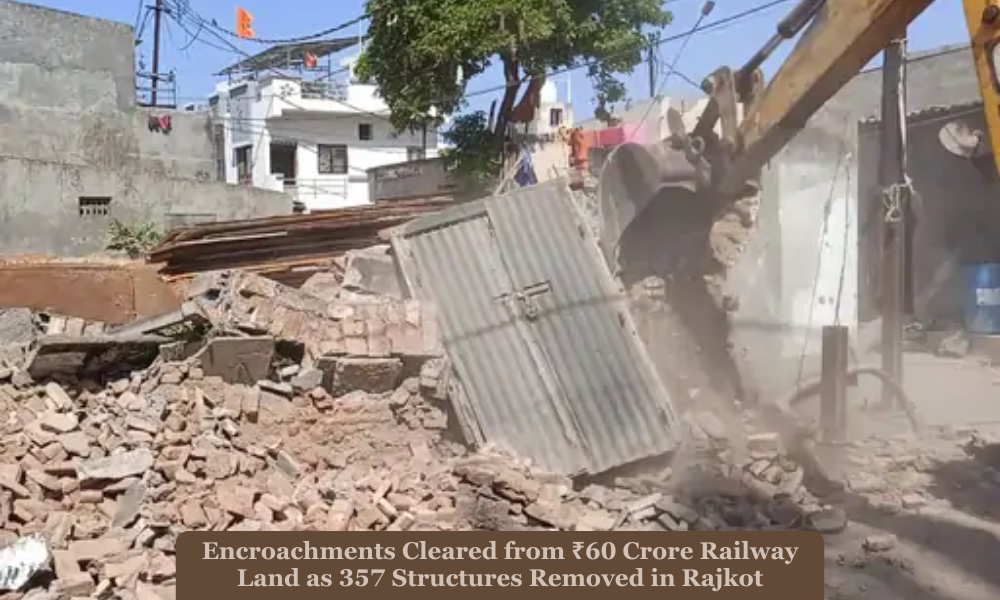
A major anti-encroachment operation carried out by railway authorities in Rajkot has resulted in the removal of 357 illegal structures from railway land valued at nearly ₹60 crore. The large-scale drive was conducted with the joint efforts of railway officials, the Railway Protection Force (RPF), the Government Railway Police (GRP), city police, and technical teams. The operation aimed to reclaim valuable railway property and improve safety and infrastructure around the railway corridor.
The action was taken in areas near railway tracks where encroachments had gradually developed over several years. Authorities stated that such illegal structures not only occupy government land but also create safety risks for railway operations and the people living in those areas.
Large-Scale Operation Conducted
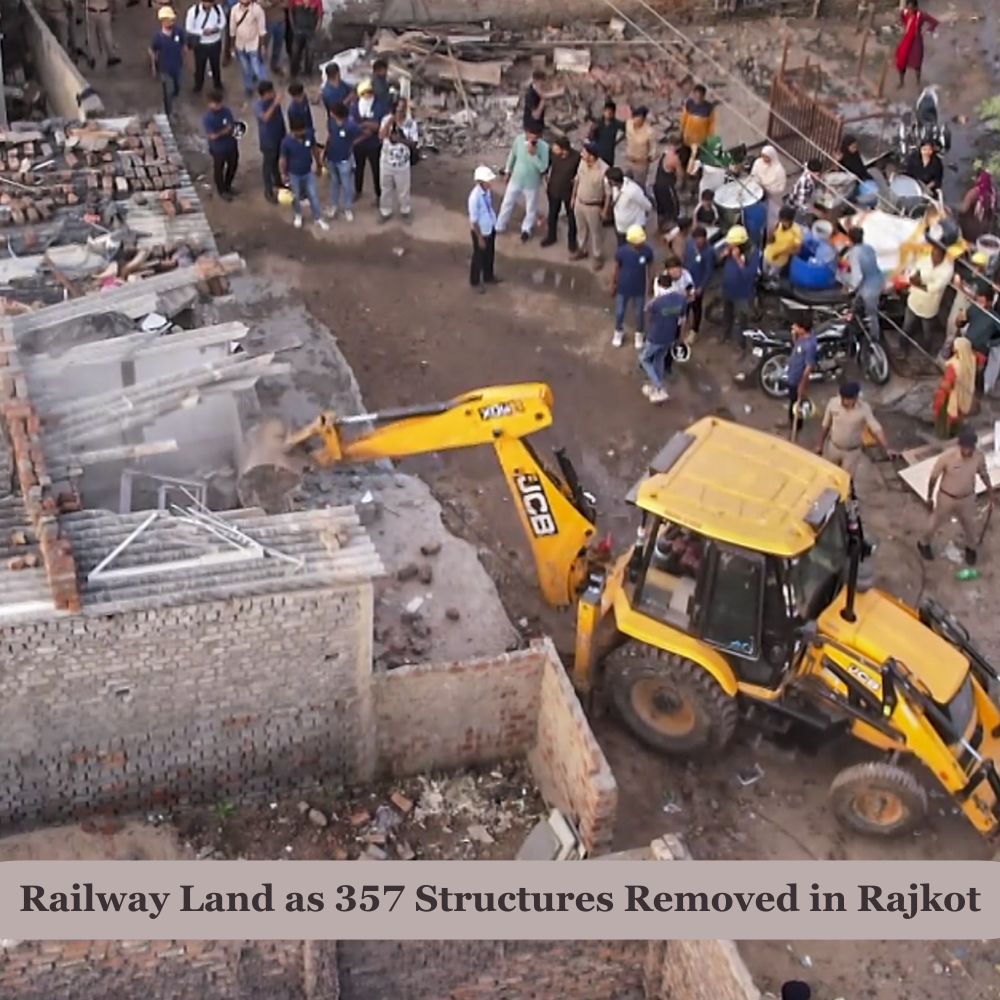
The encroachment removal drive was carried out using heavy machinery and manpower. Around ten JCB machines and more than a dozen tractors were used during the operation to demolish and remove the illegal structures. More than 400 personnel from different departments participated in the operation to ensure that the process was carried out smoothly and safely.
The demolition work began early in the day and continued for several hours as officials cleared the encroached areas. Technical teams supervised the demolition to ensure that railway infrastructure such as tracks, signals, and electrical installations were not damaged during the operation.
According to officials, the land cleared during the operation measures approximately 36,000 square meters, which forms part of a larger railway property zone. The estimated value of the reclaimed land is around ₹60 crore, highlighting the importance of the operation.
Encroachments Developed Over Time
The encroachments that were removed included temporary houses, small shops, storage structures, and other makeshift constructions. Many of these structures had been built gradually over time by individuals and families seeking space for housing or small businesses.
Officials said that the encroachments had increased over the years, making it difficult for railway authorities to maintain and develop the land. In some areas, the structures had come very close to railway tracks, which posed potential safety hazards.
Railway authorities had earlier conducted surveys and identified the encroached areas. Notices were also issued to occupants asking them to vacate the land before the demolition drive was carried out.
Safety and Development Concerns
Railway officials emphasized that removing encroachments is necessary not only to reclaim government land but also to ensure the safety of railway operations. Structures built near railway tracks can obstruct maintenance work, affect railway expansion plans, and increase the risk of accidents.
Encroachments near railway tracks can also create dangerous conditions for residents, especially when trains pass at high speeds. In many cases, people living near tracks face risks related to noise, vibrations, and accidental injuries.
By clearing the encroached areas, authorities aim to create safer surroundings and allow better management of railway land.
Multi-Department Coordination
The success of the operation was largely due to the coordination between multiple departments. Railway officials worked closely with the Railway Protection Force, Government Railway Police, and local police authorities.
Police personnel were deployed to maintain law and order during the demolition process and to ensure that there were no disruptions. Their presence helped the authorities carry out the operation without major incidents.
Technical teams from the railway department monitored the demolition work to ensure that the railway system remained unaffected. Machinery operators and field workers also played an important role in completing the task efficiently.
Challenges During the Operation
Large-scale anti-encroachment drives often involve logistical and social challenges. In this case, authorities had to manage the presence of residents who had been living in the area for many years. Some families were reluctant to leave the land, which made the process emotionally difficult for them.
Officials stated that proper procedures were followed before the demolition drive, including issuing notices and providing time for occupants to vacate the land voluntarily. Despite these measures, the operation required careful handling to avoid conflicts.
Heavy machinery and coordinated planning were necessary to remove the structures safely and quickly.
Impact on Local Residents
The demolition of illegal structures has affected several families who were living in the encroached area. Many of them had been residing there for decades and had built small homes and businesses over time.
After the demolition, some residents were seen gathering their belongings and searching for alternative places to stay. The situation has drawn attention to the broader issue of urban housing challenges and the need for long-term solutions.
Local community representatives and social organizations have also highlighted the importance of rehabilitation and support for affected families.
Future Plans for the Land
Railway authorities have indicated that the cleared land could be used for future railway development projects. Such projects may include expansion of railway infrastructure, construction of facilities, or modernization initiatives.
The removal of encroachments allows the railway department to plan and utilize the land more effectively. With increasing passenger traffic and the need for improved railway services, additional land may be required for operational improvements.
Officials believe that reclaiming railway land is essential for supporting long-term development and infrastructure growth.
Importance of Protecting Public Land
Encroachment on public land is a challenge faced by many cities across India. Government properties such as railway land, roads, and public spaces are sometimes occupied illegally due to rapid urbanization and housing shortages.
However, protecting these lands is important for infrastructure development and public safety. Authorities regularly conduct drives to identify and remove encroachments in order to maintain proper use of government property.
The Rajkot operation is one of the significant steps taken to address this issue in the region.
Conclusion
The removal of 357 illegal structures from railway land worth approximately ₹60 crore in Rajkot marks a major effort by authorities to reclaim valuable public property. Through coordinated action involving multiple departments and extensive manpower, a large portion of encroached railway land has been cleared.
While the operation highlights the importance of protecting public land and ensuring railway safety, it also brings attention to the social challenges faced by families affected by such drives. Moving forward, authorities will need to balance infrastructure development with measures that address housing and rehabilitation needs.
The reclaimed land is expected to play an important role in future railway projects and urban development plans in the region. By maintaining control over railway property, authorities aim to ensure safer operations and better infrastructure for the growing transportation network.