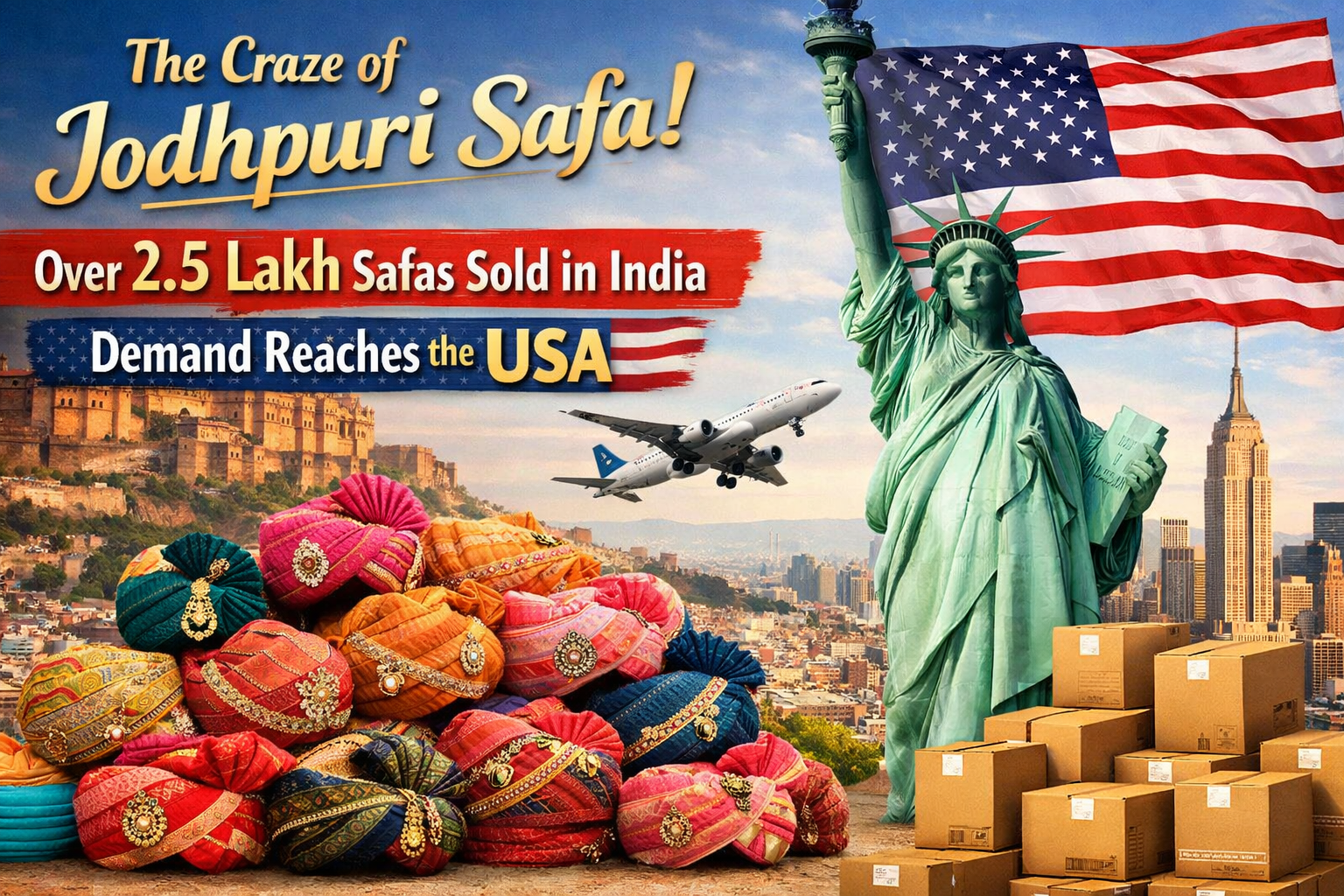
The traditional Jodhpuri Safa, once seen primarily as a symbol of royal heritage and cultural pride in Rajasthan, has today transformed into a nationwide fashion phenomenon. What was earlier limited to royal ceremonies and traditional weddings has now become a must-have accessory during the Indian wedding season. According to recent estimates, more than 2.5 lakh Jodhpuri safas have been sold across India this season alone, and the demand is no longer restricted to domestic markets. The popularity of the Jodhpuri Safa has crossed international borders, with growing demand from the United States, proving that Indian traditions continue to find admirers worldwide.
A Royal Legacy from Rajasthan
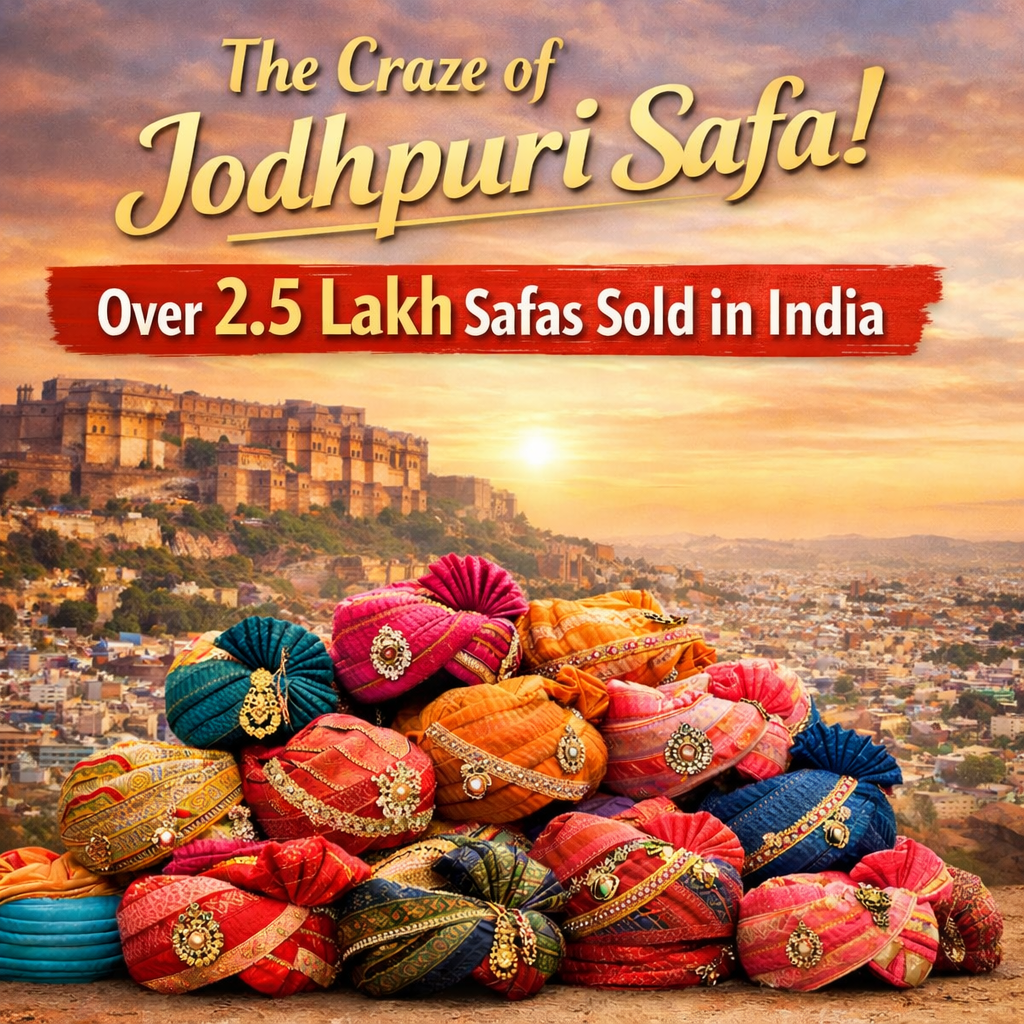
The origins of the Jodhpuri Safa can be traced back over 300 years to the royal courts of Jodhpur, located in the heart of Rajasthan. Historically, the safa was not just a headgear but a mark of honor, dignity, and social status. Kings, nobles, and warriors wore elaborately tied safas that reflected bravery, pride, and tradition. Each color and style carried its own significance—red for auspicious occasions, saffron for valor, and pastel shades for celebrations.
Over time, this regal accessory moved beyond palace walls and became an integral part of Rajasthani culture, especially during weddings, festivals, and religious ceremonies.
Wedding Season Drives Massive Sales
The biggest reason behind the current boom in Jodhpuri Safa sales is the wedding season. In modern Indian weddings, the groom’s attire is considered incomplete without a stylish safa. Today, it is not only the groom but also groomsmen, family members, and even wedding guests who prefer wearing matching or coordinated safas.
Traders in Jodhpur report that this season alone has seen sales crossing 2.5 lakh safas, with orders coming from major cities such as Delhi, Mumbai, Ahmedabad, Jaipur, and Bengaluru. Bulk orders for destination weddings and large wedding functions have further boosted demand. The safa has become a statement accessory that adds grandeur and tradition to wedding celebrations.
From Traditional to Trendy
One of the most interesting aspects of the Jodhpuri Safa’s success is its ability to evolve with changing fashion trends. While traditional bandhani and leheriya patterns remain popular, modern designs have also entered the market. Today, safas are available in a wide variety of fabrics, colors, and styles, catering to different age groups and fashion preferences.
Designers are experimenting with:
- Pastel shades for contemporary weddings
- Floral and geometric prints for younger buyers
- Lightweight fabrics for comfort
- Customized designs matching sherwanis and wedding themes
This blend of tradition and modern aesthetics has made the Jodhpuri Safa especially popular among the youth, who see it not just as cultural attire but as a fashionable accessory.
Affordable Yet Elegant
Another reason for the growing popularity is the wide price range of Jodhpuri safas. In local markets, prices generally start from as low as ₹100 and can go up to ₹15,000 or more, depending on fabric quality, craftsmanship, and design complexity. This affordability allows buyers from different economic backgrounds to embrace the tradition.
High-end safas made from premium fabrics with intricate handwork are often chosen for royal-themed weddings, while simpler designs are preferred for group functions and pre-wedding events.
International Demand on the Rise
What truly highlights the success of the Jodhpuri Safa is its growing demand in international markets, particularly in the United States. Members of the Indian diaspora, especially those hosting traditional weddings abroad, are increasingly opting for authentic Indian accessories to maintain cultural roots.
Exporters from Rajasthan have noted a steady rise in overseas orders, not only from the USA but also from countries like Canada, the UK, and Australia. For many foreign buyers, the Jodhpuri Safa represents elegance, heritage, and a connection to Indian culture. International fashion events and destination weddings have further contributed to its global recognition.
Boost to Local Artisans and Economy
The growing demand for Jodhpuri Safas has had a positive impact on local artisans and traders. The safa-making process involves skilled craftsmanship, from dyeing fabrics using traditional techniques to hand-tying and finishing. Many families in and around Jodhpur have been associated with this craft for generations.
With rising sales, employment opportunities have increased for weavers, dyers, tailors, and designers. The safa trade has become an important seasonal source of income for hundreds of small businesses, contributing significantly to the local economy.
More Than a Wedding Accessory
While weddings remain the primary market, the Jodhpuri Safa is no longer limited to marriage functions alone. It is now worn during:
- Cultural festivals
- Traditional processions
- Theme parties
- Fashion shows
- Promotional and cultural events
In recent years, even political leaders and public figures have been seen wearing Jodhpuri safas at official and cultural events, further popularizing the trend.
Preserving Tradition in a Modern World
Despite modernization and changing fashion preferences, the Jodhpuri Safa continues to hold cultural significance. Its resurgence proves that traditional attire can adapt to modern lifestyles without losing its essence. For many young Indians, wearing a safa is a way to express pride in their heritage while embracing contemporary fashion.
A Global Symbol of Indian Culture
The journey of the Jodhpuri Safa—from royal courts of Rajasthan to wedding halls across India and overseas—reflects the timeless appeal of Indian traditions. Crossing the milestone of 2.5 lakh units sold in a single season is not just a commercial success but also a cultural achievement.
As demand continues to grow in India and abroad, the Jodhpuri Safa is well on its way to becoming a global symbol of Indian heritage, elegance, and tradition. With evolving designs, increasing exports, and strong cultural roots, this iconic headgear is set to remain a fashion favorite for years to come.