
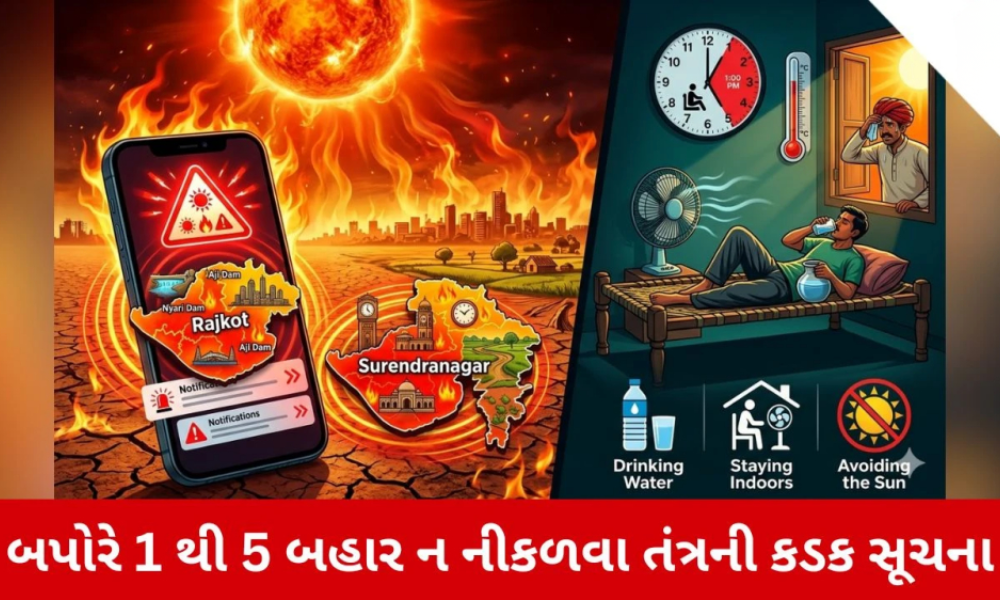
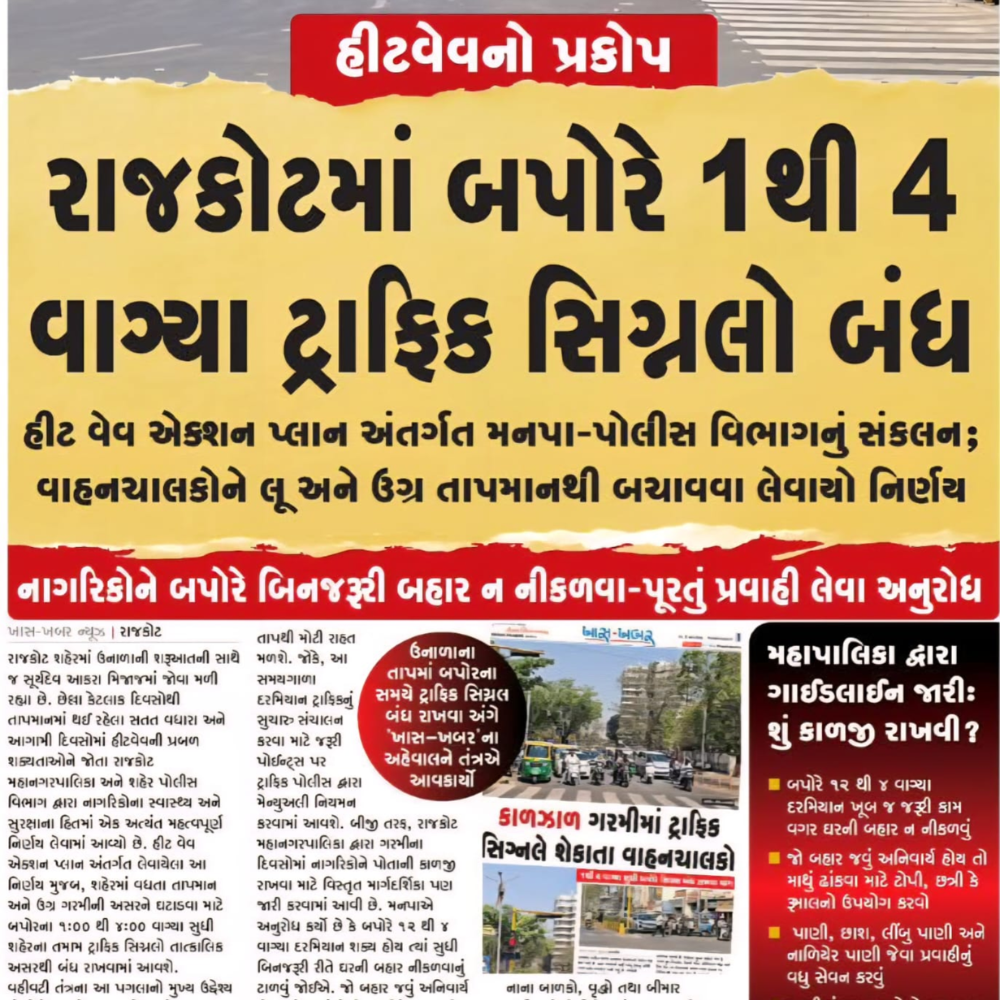
 Amid rising temperatures and increasing heatwave concerns, the city administration of Rajkot has implemented a significant step to protect public health. Under the Heat Wave Action Plan, authorities have decided to temporarily suspend traffic signals across the city during the peak heat hours between 1:00 PM and 4:00 PM. The initiative has been jointly implemented by the Rajkot Municipal Corporation and the city police department to minimize the exposure of traffic personnel and commuters to extreme heat.
This decision reflects the growing concern about heat-related illnesses and aims to ensure that both traffic officers and citizens remain safe during the hottest hours of the day.
Why This Decision Was Taken
In recent weeks, temperatures in Rajkot have been steadily rising, creating uncomfortable and potentially dangerous conditions for people working outdoors. Traffic police officers, street vendors, delivery workers, and commuters often face direct exposure to sunlight during these hours.
The city administration observed that standing at traffic signals for long durations in such extreme temperatures could lead to health issues like dehydration, heat exhaustion, and even heatstroke. Therefore, officials decided to temporarily stop signal-based traffic control during peak afternoon hours to reduce unnecessary delays and exposure.
The measure is part of a broader heat wave action plan designed to prepare the city for extremely hot weather conditions and reduce the impact on public health.
Key Highlights of the New Traffic Arrangement
- Traffic Signals Temporarily Suspended
Traffic signals across the city will not operate between 1 PM and 4 PM during the heatwave period. - Manual Traffic Management
Traffic police may manage important intersections manually where necessary to maintain smooth movement. - Protection for Traffic Personnel
The primary goal is to reduce the time traffic officers spend standing in extreme heat at signals. - Smooth Traffic Flow
Vehicles will be allowed to move more freely during these hours to prevent long waiting times at intersections. - Public Safety Measures
Authorities have also advised drivers and pedestrians to remain cautious and follow basic traffic discipline even if signals are not active.
Guidelines Issued for Citizens
Along with the traffic adjustments, the municipal corporation has issued several health and safety guidelines for residents.
1. Avoid Unnecessary Travel
Citizens are requested not to step outside during the peak afternoon hours unless it is absolutely necessary.
2. Stay Hydrated
People should drink plenty of water throughout the day to prevent dehydration.
3. Use Protective Clothing
If stepping out is unavoidable, wearing caps, sunglasses, and light-colored clothing is recommended.
4. Prefer Public Shade
Citizens should try to stay in shaded areas or indoor environments during the hottest hours.
5. Take Care of Children and Elderly
Young children, senior citizens, and people with health conditions are more vulnerable to heat and should avoid outdoor exposure.
Special Advice for Drivers and Commuters
Drivers traveling during the afternoon hours are advised to take extra precautions to stay safe on the roads.
- Drive slowly at intersections where signals are inactive.
- Follow lane discipline and traffic rules voluntarily.
- Give priority to emergency vehicles such as ambulances.
- Avoid aggressive driving or overtaking at crossings.
- Stay patient and cooperative with traffic authorities.
These simple precautions will help maintain order on the roads even when automated traffic signals are temporarily suspended.
 Impact on Daily City Life
The midday traffic signal shutdown may slightly change the way people move around the city, but the authorities believe the benefits outweigh the inconvenience.
For many commuters, the measure may actually reduce waiting time at signals, allowing vehicles to pass intersections quickly. However, responsible driving becomes even more important in such situations.
Local businesses, delivery services, and transport operators are also being encouraged to plan their schedules accordingly and avoid peak heat hours whenever possible.
Health Risks of Extreme Heat
Extreme heat can cause serious health issues if proper precautions are not taken. Some common heat-related illnesses include:
- Heat exhaustion: symptoms include dizziness, fatigue, and heavy sweating.
- Heatstroke is a dangerous condition where body temperature rises significantly.
- Dehydration – caused by loss of fluids due to excessive sweating.
Medical experts recommend drinking fluids regularly, avoiding direct sunlight, and resting in cool environments during extreme heat conditions.
Role of Municipal Authorities
The municipal corporation and city police are actively monitoring the situation and may adjust the policy depending on weather conditions. Their focus is on protecting public health while ensuring that the city’s traffic system continues to function smoothly.
Authorities have also appealed to citizens to cooperate and follow safety instructions so that the initiative can be implemented effectively.
How Citizens Can Support This Initiative
The success of this plan largely depends on public cooperation. Citizens can support the initiative by:
- Respecting traffic discipline even when signals are off.
- Avoiding unnecessary travel during peak heat hours.
- Following health guidelines issued by authorities.
- Helping elderly family members stay safe from heat exposure.
Responsible behavior by the public will ensure that the system works efficiently and safely.
Conclusion
The decision by the Rajkot administration to suspend traffic signals between 1 PM and 5 PM is a proactive step aimed at protecting both traffic personnel and citizens from the harsh effects of extreme heat. By implementing this measure under the Heat Wave Action Plan, authorities have shown a commitment to public safety and health.
While the change may require some adjustment from commuters, the overall objective is to reduce heat exposure and prevent heat-related illnesses. With proper cooperation from citizens and responsible driving practices, the initiative can successfully protect lives and keep traffic moving smoothly during the city’s hottest hours.
As temperatures continue to rise in many parts of India, such innovative measures may become increasingly important for urban safety and climate adaptation.