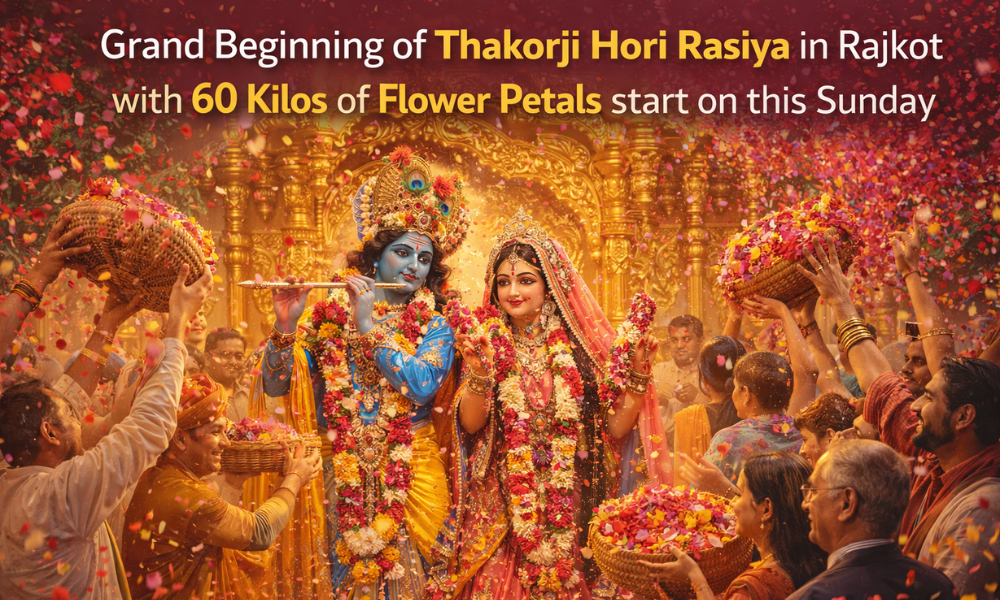
Rajkot is set to immerse itself in devotion, tradition, and vibrant colors as the grand Thakorji Hori Rasiya festival begins this Sunday. One of the most awaited religious and cultural celebrations in the city, the festival will commence with the ceremonial use of nearly 60 kilos of sacred flower petals, marking the start of days filled with spiritual fervor, devotional music, and age-old rituals. Devotees from various parts of the city are preparing to gather in large numbers to witness and participate in this unique celebration dedicated to Thakorji.
The Thakorji Hori Rasiya holds deep religious significance and is closely associated with the traditions of Holi and Vasant Panchami. In Rajkot, the festival has evolved into a major annual event that blends devotion with cultural expression, attracting devotees of all age groups. The use of flower petals instead of chemical colors highlights the spiritual and eco-friendly essence of the celebration, symbolizing purity, devotion, and divine joy.
A Sacred Tradition Rooted in Devotion
Hori Rasiya is traditionally celebrated as a divine play of colors between Lord Krishna, Radha, and the gopis. In Rajkot, the tradition has been preserved with great reverence, focusing on bhakti rather than spectacle. The festival begins with special prayers and rituals offered to Thakorji, followed by the symbolic playing of Holi using fragrant flower petals.
According to temple authorities, the use of 60 kilos of carefully selected flower petals has special significance. These petals are collected, cleaned, and prepared well in advance to ensure they meet ritual standards. The act of showering petals on the deity and devotees is considered an offering of love and surrender, creating a spiritually uplifting atmosphere.
Five Days of Night Darshan and Special Rituals
The festival is not limited to a single day. Following the grand opening on Sunday, devotees will be able to attend special night darshan for five consecutive days. These extended hours allow working devotees and families to participate comfortably and seek blessings during the sacred period.
Each night features unique decorations, themed rituals, and devotional music sessions. Traditional kirtans, bhajans, and ras performances form an integral part of the celebration, narrating episodes from the life of Lord Krishna. The temple premises are beautifully adorned with flowers, lights, and traditional motifs, enhancing the devotional experience.
Spiritual Preparations and Community Participation
Preparations for the Thakorji Hori Rasiya festival begin weeks in advance. Temple volunteers, priests, and community members work together to manage arrangements, from floral decorations to crowd control. Devotees also contribute by offering flowers, prasad, and seva, reflecting the collective spirit of the festival.
Special emphasis is placed on cleanliness and discipline during the event. Organizers have ensured that the use of flower petals keeps the celebration environmentally responsible while maintaining the sanctity of the rituals. Security arrangements and volunteer services have been strengthened to manage the expected increase in footfall.
Cultural Significance in Rajkot
Over the years, the Thakorji Hori Rasiya festival has become an important cultural marker in Rajkot’s religious calendar. Beyond its spiritual importance, the festival brings the community together, fostering harmony and shared devotion. Families, elders, youth, and children participate with equal enthusiasm, making it a truly inclusive celebration.
For many devotees, attending the Hori Rasiya is a cherished tradition passed down through generations. The sight of petals gently falling, accompanied by devotional music, creates a serene yet joyful environment that leaves a lasting impression on participants.
Eco-Friendly and Devotional Holi
In an era where traditional festivals are often overshadowed by excessive use of synthetic colors and noise, the Thakorji Hori Rasiya in Rajkot stands out for its simplicity and spiritual depth. The exclusive use of flower petals aligns with the principles of environmental responsibility and devotion.
Temple authorities have encouraged devotees to follow these values, emphasizing that true celebration lies in spiritual connection rather than extravagance. The festival thus serves as an example of how traditional celebrations can be adapted thoughtfully in modern times.
Devotees Share Their Faith and Joy
Many devotees have expressed excitement ahead of the festival’s commencement. For them, the Hori Rasiya is not just an event but a moment of inner peace and spiritual renewal. Elderly devotees recall attending the festival for decades, while younger participants see it as a meaningful way to connect with cultural roots.
Several families plan their schedules around the five-day celebration, ensuring they can attend the night darshan at least once. The festival also attracts visitors from nearby areas who come specifically to experience Rajkot’s unique style of Hori Rasiya.
Temple Administration Ensures Smooth Conduct
The temple administration has made comprehensive arrangements to ensure the smooth conduct of the festival. Entry and exit routes have been clearly defined, and volunteers will guide devotees during peak hours. Medical assistance and drinking water facilities have also been arranged to ensure the safety and comfort of attendees.
Officials have appealed to devotees to cooperate with the administration, follow guidelines, and maintain discipline throughout the event. Such cooperation, they say, is essential to preserve the sanctity and success of the festival.
Conclusion
The grand beginning of Thakorji Hori Rasiya in Rajkot with 60 kilos of flower petals marks the start of a spiritually enriching period for devotees. Beginning this Sunday, the festival promises five days of devotion, music, and sacred rituals, offering an opportunity for the community to come together in faith and celebration.
As Rajkot prepares to welcome this cherished tradition once again, the Thakorji Hori Rasiya stands as a reminder of the city’s deep-rooted cultural values and enduring devotion. Through its blend of simplicity, spirituality, and community participation, the festival continues to inspire and uplift generations of devotees.