
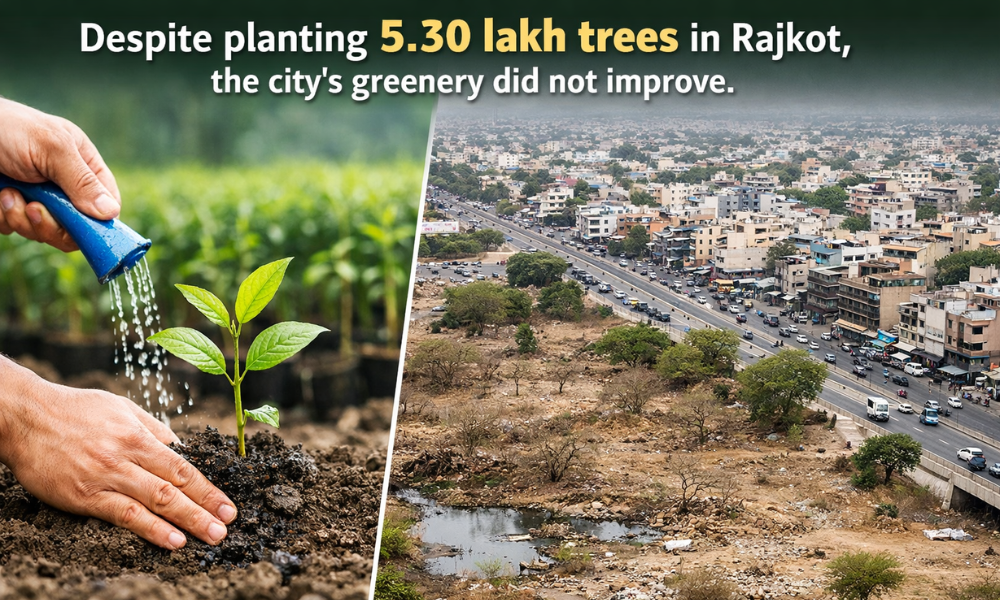
Over the past few years, Rajkot has undertaken an ambitious tree plantation drive, claiming that nearly 5.30 lakh saplings have been planted across the city. On paper, the figure appears impressive and suggests a strong commitment to environmental protection. However, the reality on the ground tells a different story. Despite large-scale plantation efforts, Rajkot’s overall greenery has not increased, and in some areas, it has visibly declined. This raises serious questions about planning, execution, maintenance, and the true intent behind such drives.
One of the primary reasons for this paradox is the lack of survival of planted saplings. Tree plantation does not end with planting; it requires continuous care, including watering, protection from grazing and construction damage, soil enrichment, and monitoring. In many parts of the city, saplings planted along roadsides, dividers, and open plots dry up within months due to neglect. Without proper aftercare, plantation drives become symbolic gestures rather than meaningful environmental solutions.
Another critical issue is urban development and infrastructure expansion. Rajkot, like many fast-growing cities, is witnessing rapid construction of roads, flyovers, commercial complexes, and residential projects. In the process, mature trees are often cut down. While authorities may compensate for this loss by planting new saplings elsewhere, the ecological value of a young plant cannot replace that of a decades-old tree. Mature trees provide extensive shade, absorb large amounts of carbon dioxide, support biodiversity, and regulate local temperatures—benefits that saplings will take years to deliver.
The location of plantation also plays a major role. Many trees are planted in areas that are unsuitable for long-term growth, such as narrow road margins, poorly prepared soil, or places prone to waterlogging or drought. In some cases, saplings are planted merely to fulfill numerical targets, without considering species suitability or space availability. As a result, these plants either fail to grow properly or are removed later during road widening or other civic works.
Species selection is another concern. Often, fast-growing or ornamental species are preferred because they are easy to plant and show quick visual results. However, such trees may not be native to the region and may not support local birds, insects, and ecosystems. Native tree species are better adapted to local climate conditions and require less maintenance, but they are frequently ignored in favor of short-term gains.
Public participation in plantation drives has also remained limited. While schools, NGOs, and social organizations occasionally take part, the broader community often sees tree planting as the government’s responsibility alone. Moreover, citizens are rarely involved in the maintenance of trees planted near their homes. In many housing societies, residents hesitate to plant trees due to fear of falling branches, leaf litter, or damage to buildings and vehicles. This mindset further contributes to the decline of urban green cover.
Administrative challenges cannot be overlooked. Plantation drives are often carried out as one-time campaigns, especially during monsoon seasons, with little follow-up data on survival rates. There is a lack of transparent reporting on how many of the planted trees are still alive after one, three, or five years. Without accountability, plantation numbers remain statistics rather than indicators of real environmental progress.
The impact of insufficient greenery is already visible in Rajkot. Rising temperatures, worsening air quality, and declining groundwater levels are becoming common concerns. Trees play a vital role in cooling urban environments by reducing the heat island effect. Their absence makes summers harsher, increases energy consumption for cooling, and affects overall quality of life. Additionally, reduced green cover affects rainfall absorption, leading to urban flooding during monsoons and water scarcity during dry seasons.
To reverse this trend, Rajkot needs to shift its focus from quantity to quality. Instead of celebrating the number of saplings planted, authorities should prioritize survival rates, tree health, and long-term ecological impact. Proper planning, including soil testing, selection of native species, and identification of protected green zones, is essential. Regular audits and public disclosure of plantation outcomes can also improve transparency and trust.
Citizen involvement is equally important. Awareness campaigns should emphasize that trees are shared assets, not obstacles. Incentives for housing societies, schools, and businesses to maintain green spaces can encourage participation. Adopting trees, community watering programs, and local monitoring groups can significantly improve survival rates.
In conclusion, the case of Rajkot highlights a common challenge faced by many urban centers in India. Large numbers of trees planted do not automatically translate into increased greenery. Without thoughtful planning, sustained care, and community ownership, plantation drives risk becoming hollow achievements. True environmental progress lies not in counting saplings, but in nurturing living, thriving urban forests that benefit present and future generations.