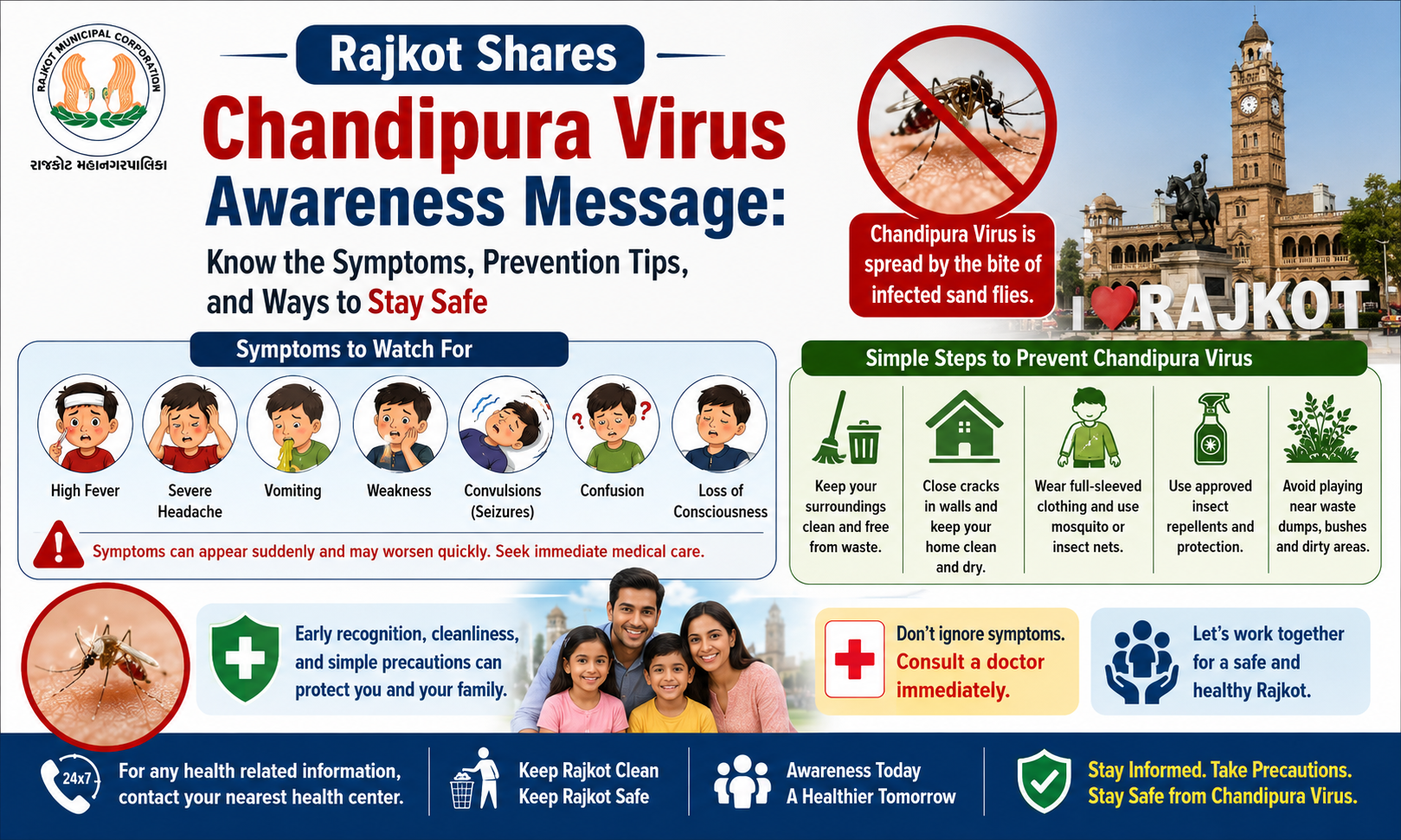
The Rajkot Municipal Corporation (RMC) has shared an important public awareness message to educate citizens about the Chandipura virus and the precautions needed to reduce the risk of infection. The initiative aims to help families understand the symptoms, follow preventive measures, and seek timely medical care if necessary. Public awareness plays a vital role in protecting communities, especially during the monsoon season when the virus is more likely to spread.
What Is Chandipura Virus ?
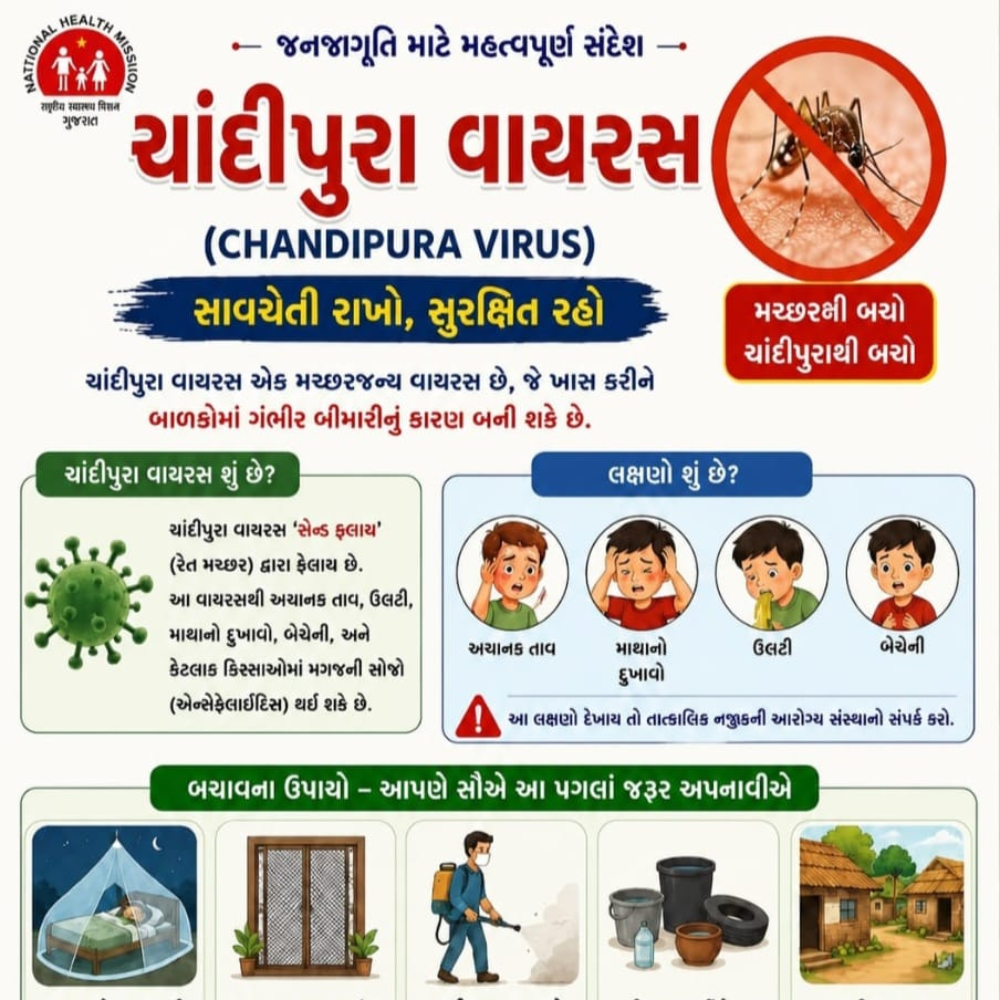
Chandipura virus is a viral infection that primarily affects children, although anyone can become infected. The virus belongs to the Vesiculovirus group and is transmitted mainly through the bite of infected sand flies. Cases are generally reported during the rainy season when sand fly activity increases.
Although Chandipura virus infections are relatively uncommon, they can progress rapidly. Early recognition of symptoms and immediate medical attention are essential to improve outcomes.
How Does the Virus Spread?
The Chandipura virus is mainly spread through infected female sand flies. These tiny insects usually breed in:
- Damp and dark areas
- Cracks in walls
- Animal shelters
- Piles of waste
- Bushes and vegetation around homes
Unlike mosquitoes, sand flies are very small and often bite during the evening and nighttime. Maintaining clean surroundings helps reduce their breeding.
Common Symptoms of Chandipura Virus
The awareness message highlights the importance of recognizing symptoms early. Some of the common signs include:
- High fever
- Severe headache
- Vomiting
- Weakness
- Convulsions or seizures
- Confusion
- Loss of consciousness in severe cases
Symptoms may appear suddenly and can worsen within a short period. Anyone experiencing these symptoms, especially children, should receive immediate medical evaluation.
Why Early Medical Care Matters ?
One of the biggest concerns with Chandipura virus is the speed at which the illness can progress. Delaying treatment may increase the risk of serious complications.
Parents and caregivers should not ignore:
- Persistent high fever
- Repeated vomiting
- Sudden drowsiness
- Fits or seizures
- Unusual behavior changes
Visiting the nearest health center without delay can make a significant difference.
Prevention Tips Shared by Rajkot Authorities
The awareness message emphasizes practical steps that every household can follow to reduce exposure to sand flies.
Keep Your Surroundings Clean
Maintaining cleanliness is one of the simplest preventive measures.
- Remove stagnant waste
- Dispose of garbage regularly
- Clean animal shelters
- Keep gardens free of excessive weeds
- Avoid accumulation of debris
A clean environment discourages sand fly breeding.
Protect Children from Insect Bites
Children are considered more vulnerable to Chandipura virus. Parents should ensure they:
- Wear full-sleeved clothing
- Use mosquito or insect nets while sleeping
- Avoid playing near waste dumps
- Stay indoors during peak sand fly activity when possible
Simple protective habits can lower the chances of insect bites.
Maintain Good Home Hygiene
Homes should be kept well-maintained by:
- Closing cracks in walls
- Keeping rooms clean and dry
- Using window screens where possible
- Ensuring proper ventilation
These measures help reduce places where insects may hide.
Use Approved Insect Protection
Following local health recommendations regarding insect control can provide additional protection.
This may include:
- Insect repellents
- Indoor insect sprays
- Protective nets
- Other approved preventive methods
Residents should always use products according to safety instructions.
Importance of Community Awareness
Public awareness is one of the most effective tools in preventing infectious diseases. When families understand how a disease spreads, they are more likely to adopt healthy habits.
Community participation helps by:
- Sharing accurate information
- Encouraging early medical consultation
- Maintaining neighborhood cleanliness
- Supporting public health campaigns
Every household contributes to creating a safer environment.
Special Care During the Monsoon
Monsoon conditions often increase insect activity. During this period, families should remain extra cautious.
Recommended precautions include:
- Keeping surroundings dry and clean
- Removing waste regularly
- Checking children’s health daily
- Avoiding unnecessary exposure to insect-prone areas
- Following health department guidance
Seasonal vigilance can help reduce disease transmission.
Role of Parents and Guardians
Parents are encouraged to closely monitor children’s health, particularly during the rainy season. Even mild symptoms should not be ignored if they develop suddenly.
Parents should:
- Check for fever regularly
- Ensure children stay hydrated
- Seek medical advice promptly
- Follow doctors’ recommendations completely
- Avoid self-medication in serious cases
Prompt action is always safer than waiting for symptoms to worsen.
Community Responsibility
Preventing the spread of vector-borne diseases requires collective effort. Residents can contribute by:
- Keeping public spaces clean
- Reporting unhygienic conditions
- Participating in cleanliness drives
- Sharing awareness messages with neighbors
- Helping elderly and vulnerable families understand preventive measures
A community that works together is better prepared to reduce health risks.
Stay Informed Through Official Sources
Health-related information should always be obtained from official government departments and qualified medical professionals. Avoid relying on rumors or unverified social media posts, as misinformation can create unnecessary panic.
Residents should pay attention to updates issued by local health authorities and follow any preventive guidance provided.
Conclusion
The awareness message shared in Rajkot serves as an important reminder that prevention begins with knowledge and responsible action. Understanding the symptoms of Chandipura virus, maintaining clean surroundings, protecting children from insect bites, and seeking immediate medical care when symptoms appear can significantly reduce health risks. By staying informed and following recommended preventive measures, citizens can help protect themselves, their families, and the wider community while supporting ongoing public health efforts.