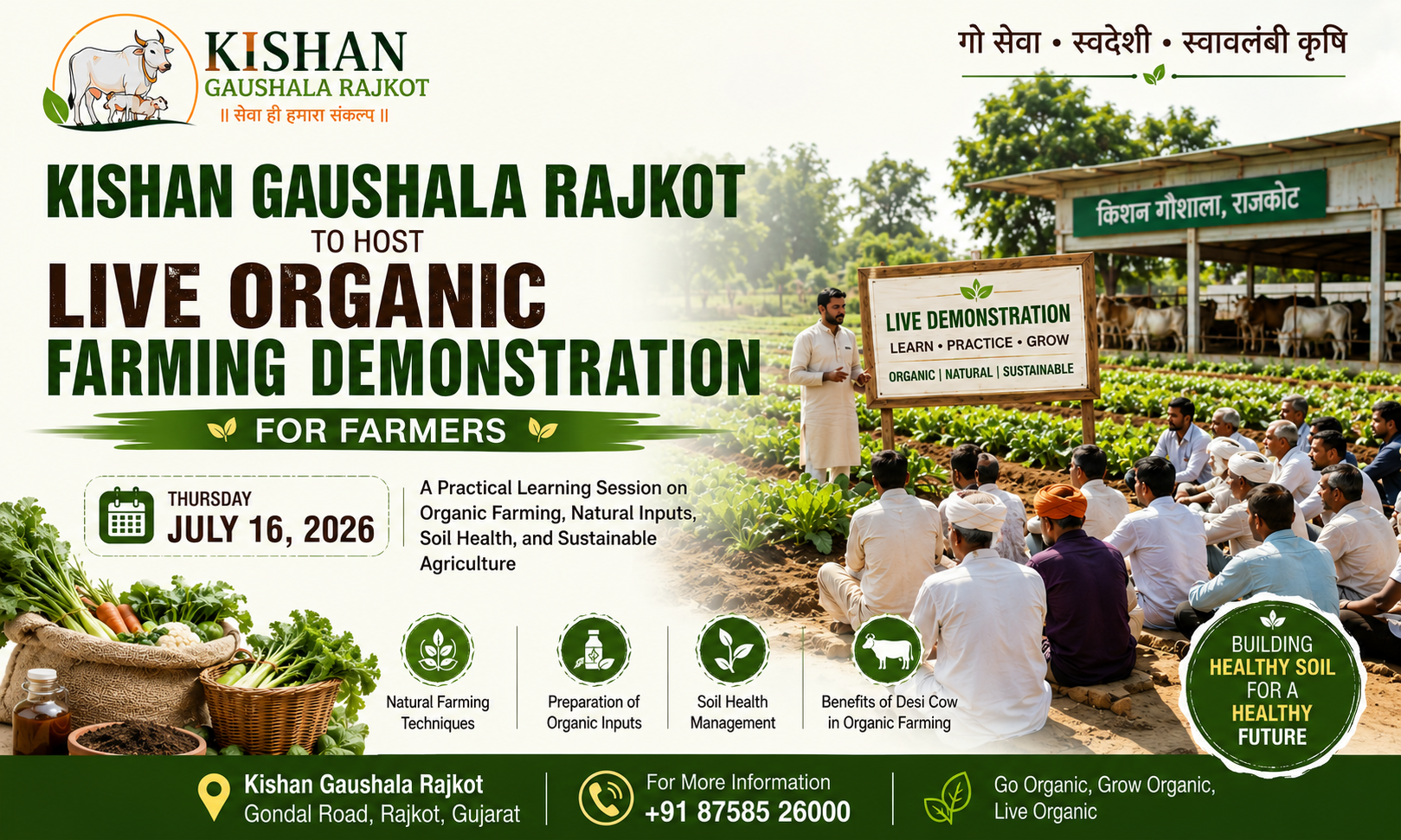
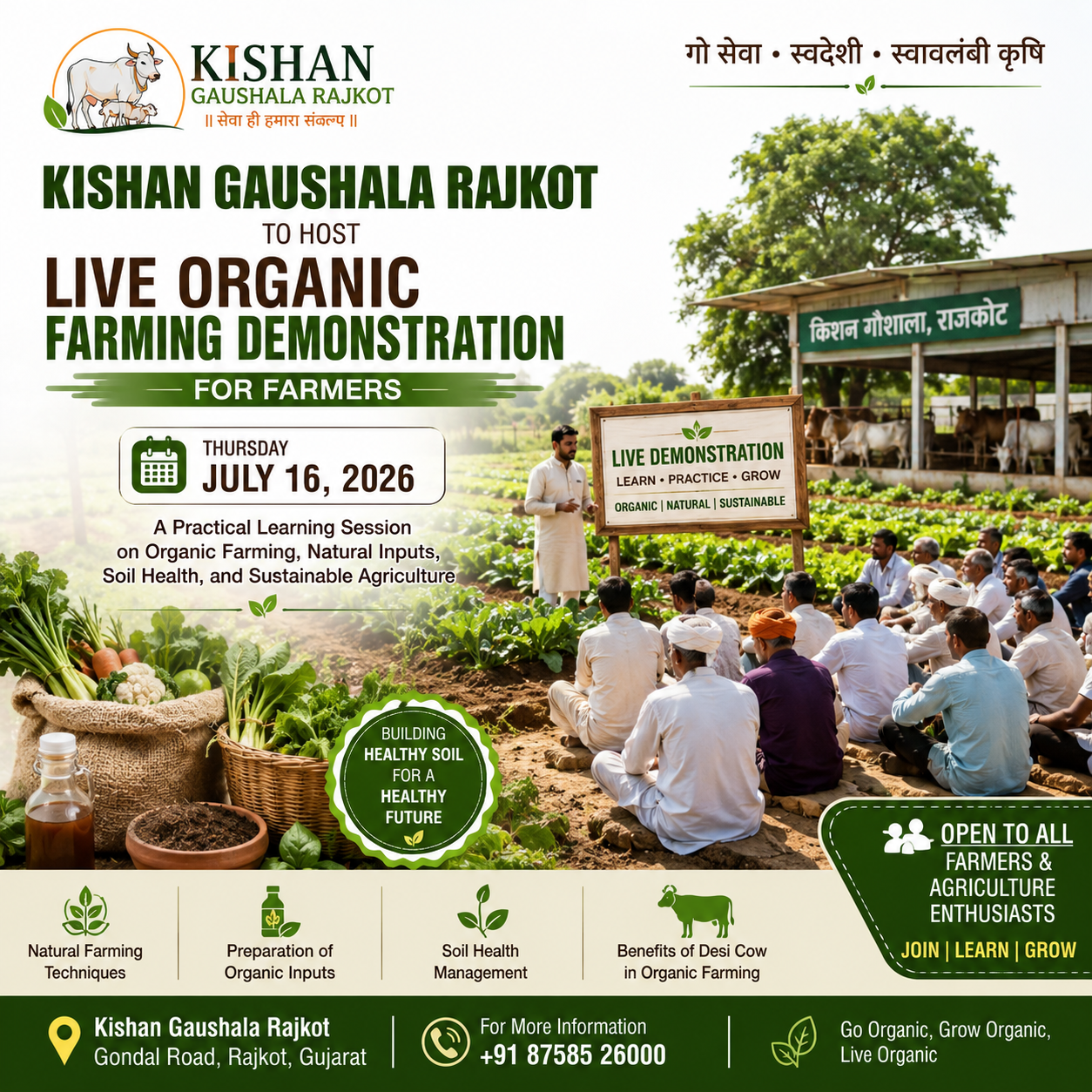
Organic farming continues to gain popularity as more farmers look for sustainable and cost-effective methods to improve soil health, reduce chemical dependency, and produce healthier crops. To encourage the adoption of natural farming techniques, Kishan Gaushala Rajkot is organizing a Live Organic Farming Demonstration on July 16, 2026. The event is expected to bring together farmers, agricultural experts, students, and individuals interested in eco-friendly farming practices for a day of practical learning and knowledge sharing.
The demonstration has been planned to provide hands-on experience rather than just classroom discussions. Participants will have the opportunity to observe various organic farming methods being implemented in real farming conditions. From preparing organic fertilizers to understanding soil management, the event will cover several important aspects that can help farmers improve productivity while protecting the environment.
A Practical Learning Experience
Unlike traditional seminars, the live demonstration will allow farmers to witness each farming technique step by step. Experts will explain every process in detail, making it easier for attendees to understand how these methods can be adopted on their own farms.
The objective is to bridge the gap between theory and practical implementation by showcasing successful organic farming techniques that have delivered positive results in agricultural fields.
Importance of Organic Farming
Organic farming has become an essential part of sustainable agriculture. Excessive use of chemical fertilizers and pesticides has affected soil fertility, groundwater quality, and crop health in many regions. Organic farming provides an environmentally friendly alternative by promoting natural inputs and biological processes.
Some of the major benefits include:
- Improved soil fertility and structure
- Better water retention capacity
- Reduced environmental pollution
- Lower dependence on expensive chemical fertilizers
- Production of healthier and chemical-free crops
- Enhanced biodiversity in agricultural fields
- Long-term sustainability of farming operations
The demonstration aims to show that organic farming is not only environmentally responsible but also economically beneficial when managed correctly.
Demonstration of Organic Fertilizer Preparation
One of the key attractions of the event will be the live preparation of organic fertilizers. Agricultural experts will explain how farmers can prepare nutrient-rich fertilizers using locally available natural resources.
Participants will learn about:
- Compost preparation
- Vermicompost production
- Cow dung-based organic manure
- Liquid organic fertilizers
- Bio-enhancers for crop growth
- Farm waste recycling techniques
These methods can significantly reduce farming costs while improving soil productivity.
Natural Pest Management Techniques
Managing pests without chemical pesticides remains one of the biggest concerns for organic farmers. During the event, experts will demonstrate various natural pest management solutions.
Topics may include:
- Neem-based formulations
- Botanical extracts
- Biological pest control methods
- Beneficial insects
- Crop rotation strategies
- Trap cropping
- Organic pest repellents
These environmentally safe techniques help maintain crop health without harming beneficial organisms or contaminating the soil.
Soil Health Improvement
Healthy soil is the foundation of successful agriculture. The demonstration will focus on methods that improve soil quality naturally over time.
Experts will discuss:
- Increasing organic matter
- Improving microbial activity
- Soil moisture conservation
- Mulching techniques
- Green manure crops
- Cover cropping
- Balanced nutrient management
Farmers will gain practical knowledge about maintaining fertile land for future generations.
Water Conservation Practices
Efficient use of water is becoming increasingly important due to changing weather patterns and water shortages. Organic farming encourages several water-saving practices that improve crop performance.
The demonstration may include:
- Mulching for moisture retention
- Drip irrigation compatibility
- Rainwater harvesting concepts
- Soil moisture management
- Reduced irrigation frequency through healthy soil
These techniques help farmers reduce water consumption while maintaining crop quality.
Crop Planning and Diversification
Agricultural specialists are expected to explain how crop diversification supports healthier farming systems. Growing multiple crops improves soil balance, reduces pest outbreaks, and creates better income opportunities.
Topics may include:
- Seasonal crop planning
- Mixed cropping
- Intercropping
- Crop rotation
- Integrated farming systems
These strategies help reduce farming risks while improving overall productivity.
Role of Indigenous Cow-Based Farming
Since the event is hosted at a gaushala, special emphasis will be placed on cow-based agricultural practices. Indigenous cow products have traditionally played an important role in natural farming systems across India.
Participants may learn about:
- Cow dung utilization
- Cow urine-based formulations
- Panchagavya preparation
- Jeevamrut preparation
- Beejamrut seed treatment
These traditional practices are being increasingly adopted by farmers seeking sustainable alternatives to chemical farming.
Expert Guidance and Farmer Interaction
The event will also provide an opportunity for direct interaction with agricultural experts. Farmers can discuss their individual farming challenges and receive practical suggestions based on their local conditions.
Interactive discussions are expected to cover topics such as:
- Organic certification basics
- Cost reduction strategies
- Market opportunities for organic produce
- Crop disease management
- Soil testing
- Farm planning
- Government agricultural schemes
Such discussions allow participants to gain solutions that are directly applicable to their farming operations.
Benefits for New Farmers
Young farmers and agriculture students attending the demonstration can gain valuable exposure to modern organic farming techniques. Practical field demonstrations often provide a much deeper understanding than textbooks alone.
Participants will also have opportunities to network with experienced organic farmers who have successfully adopted natural farming methods.
Promoting Sustainable Agriculture
Events like this play an important role in spreading awareness about sustainable farming. As climate change, rising input costs, and declining soil fertility continue to challenge agriculture, organic farming offers practical solutions that support both farmers and the environment.
By promoting natural resource management, biodiversity, and soil conservation, such demonstrations encourage long-term agricultural resilience while helping farming communities become more self-reliant.
Community Awareness
Apart from farmers, the event is expected to attract members of the general public interested in healthy food production and environmental conservation. Increased awareness about organic agriculture benefits consumers as well, as demand for naturally grown produce continues to rise.
Educational institutions and agricultural organizations can also benefit from observing practical demonstrations that can be shared with future farming professionals.
Looking Ahead
The Live Organic Farming Demonstration at Kishan Gaushala Rajkot on July 16, 2026, promises to be an informative event for anyone interested in sustainable agriculture. Through practical demonstrations, expert guidance, and farmer interaction, participants will gain valuable knowledge that can be applied directly to their agricultural practices.
As more farmers explore eco-friendly cultivation methods, initiatives like these contribute significantly to building a stronger, healthier, and more sustainable agricultural future. The event serves as an excellent platform for learning, collaboration, and encouraging farming practices that benefit both the farming community and the environment for generations to come.