




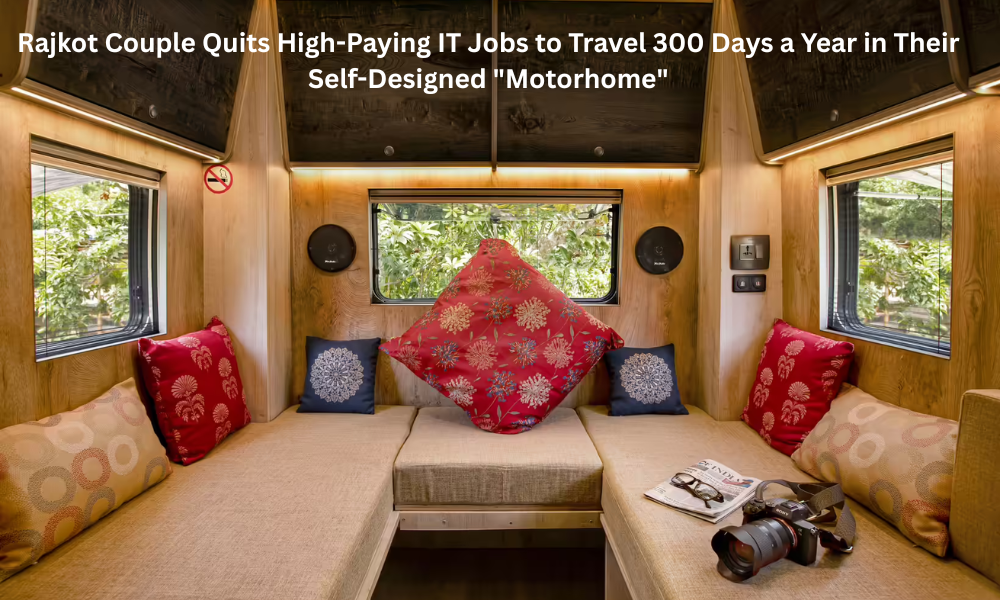
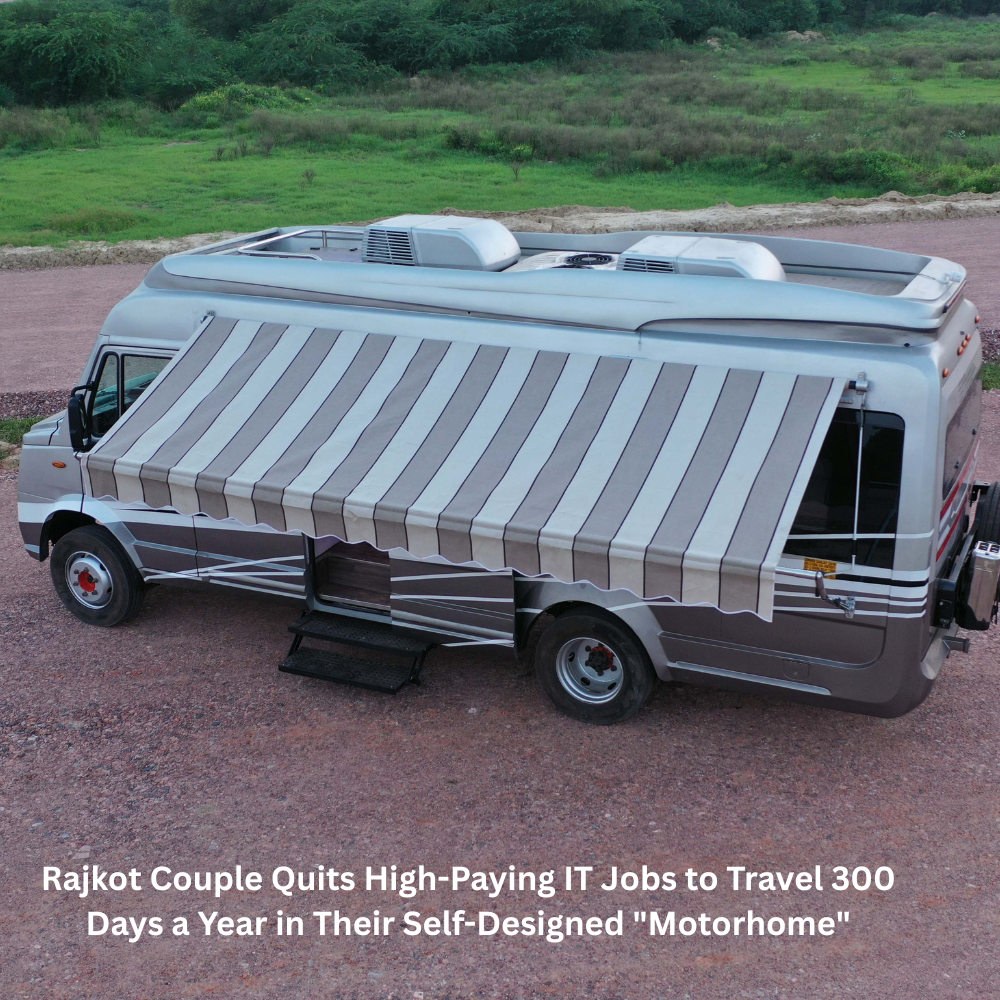
In a world where the pursuit of a stable, high-paying career is often considered the ultimate life goal, a young couple from Rajkot has chosen a strikingly different path. Engineers Panchal and his wife Kajal, residents of the Raiya Chowkdi area in Rajkot, walked away from their lucrative IT careers to embrace a life of stress-free travel. Today, they spend nearly 300 days a year on the road, living out of a compact, self-converted “motorhome” built from their own car.
From Cubicles to Open Roads
For most people, quitting a well-paying IT job is unthinkable, especially without a concrete backup plan. But for this Rajkot-based couple, the decision came after years of mounting pressure, long working hours, and a creeping sense of dissatisfaction with conventional corporate life. Both husband and wife worked as engineers in the IT sector, drawing comfortable salaries, yet found themselves increasingly drained physically and mentally by the demands of their jobs.
The turning point, as the couple explains, was a combination of health concerns and a long-standing love for travel. The constant stress of meeting deadlines and managing workplace pressure began taking a toll on their health, with high blood pressure becoming a recurring issue. On a doctor’s advice, they started taking short weekend trips on their bike to nearby destinations as a way to de-stress and explore. What began as a simple coping mechanism for work-related anxiety soon blossomed into a full-fledged passion for travel one that neither of them wanted to give up.
A Difficult but Liberating Decision
The shift from occasional weekend getaways to a full-time nomadic lifestyle didn’t happen overnight. It took courage, careful planning, and ultimately, a leap of faith. The husband recalls how, after his father’s untimely passing, the responsibility of the family fell on his shoulders early in life. This sense of duty had shaped much of his career choices until the constant grind of corporate life began to feel unsustainable.
Eventually, when their employer suggested that the husband seemed to be “too distracted” and “not focused enough” on his job a polite way of acknowledging his growing disengagement it became the catalyst for a major life decision. He resigned from his position, freeing himself from the burden of stress. With the steady income gone, the couple also gave up their rented home, since they could no longer justify the monthly expense. In its place, they designed and built something far more unconventional: a tiny, mobile home using their own car.
Designing a Home on Wheels
What makes this story particularly inspiring is the couple’s resourcefulness and DIY spirit. Rather than purchasing an expensive ready-made camper van, they custom-designed a compact hatchback vehicle to function as a fully livable space. The car was thoughtfully modified to include a bed and a small kitchen setup, transforming it into a comfortable, self-sufficient mobile home.
This DIY motorhome allows the couple to cook their own healthy, vegetarian meals on the road, significantly cutting down on both food expenses and the health risks associated with eating out frequently. It also reduces their dependency on hotels and lodges, since the vehicle itself doubles as their accommodation. This frugal yet thoughtful approach has enabled them to travel extensively while keeping costs remarkably low proving that a nomadic lifestyle doesn’t have to come with a hefty price tag.
300 Days, One Year, Countless Memories
Since beginning this journey, the couple has spent an astonishing 300 days of the year living and traveling in their motorhome. Their travels began in earnest from December of the previous year, and they have remained continuously on the move for the past five months. Over this period, they have undertaken five separate cross-country journeys across India, exploring diverse landscapes, cultures, and communities along the way.
One of the more unusual and memorable experiences shared by the couple involves an overnight stay in a cremation ground. Unfamiliar with the local geography of a particular area, they unknowingly parked and rested for the night near a crematorium, not realizing the nature of the location until locals informed them the next morning. While startling in hindsight, the couple recounts the experience with a mix of surprise and amusement, treating it as just one of many unexpected adventures that come with a life constantly in motion.
Their travels have also brought them face-to-face with India’s rich and often surprising biodiversity. Venturing into remote and untouched natural locations, they have had the rare privilege of encountering wildlife unexpectedly a stark contrast to the concrete, fast-paced environment they once inhabited in their IT careers.
Health Benefits and a New Outlook on Life
Perhaps the most telling outcome of this lifestyle change is its impact on their physical and mental wellbeing. The high blood pressure issues that once plagued the husband due to work-related stress have reportedly disappeared since he stopped working in a conventional job. The couple credits their improved health to the freedom from corporate stress, regular physical activity associated with travel, and a disciplined, home-cooked, vegetarian diet maintained even while on the road.
Their story stands as a powerful example of how reevaluating priorities choosing health, peace of mind, and personal fulfillment over financial security and career status can lead to a profoundly different, yet deeply satisfying, way of life.
A Message Beyond the Headlines
While their lifestyle may not be replicable for everyone, the Rajkot couple’s journey resonates as a broader commentary on modern work culture, burnout, and the increasing desire among young professionals to seek alternatives to the traditional 9-to-5 grind. Their experience highlights a growing trend, particularly among India’s urban, educated youth, of stepping away from high-stress careers in search of simpler, more meaningful lives.
For Panchal and Kajal, the open road has replaced the office cubicle, and a self-built motorhome has replaced the four walls of a rented apartment. Their story is not just about travel it’s about reclaiming time, health, and happiness on their own terms.