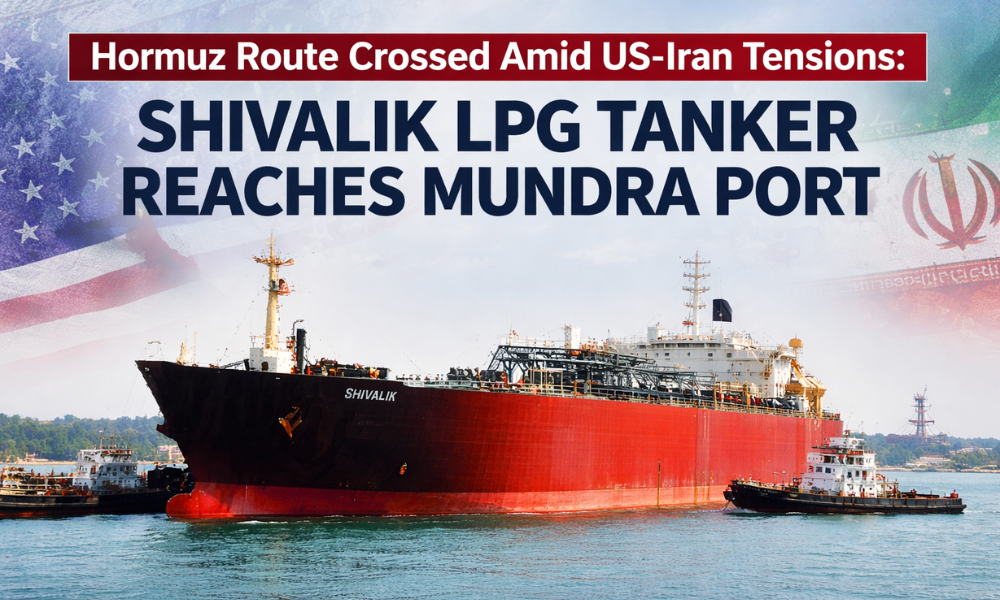
In a major development for India’s energy security, the LPG tanker Shivalik has successfully reached Mundra Port in Gujarat after navigating the highly sensitive Strait of Hormuz. The arrival comes at a time when tensions between the United States and Iran have significantly impacted global oil and gas supply chains, raising concerns about fuel availability in several countries, including India.
The safe docking of the tanker is being seen as a crucial achievement, not only for India’s logistics and maritime sector but also for ensuring uninterrupted LPG supply to millions of households.
Safe Passage Through a Critical Route
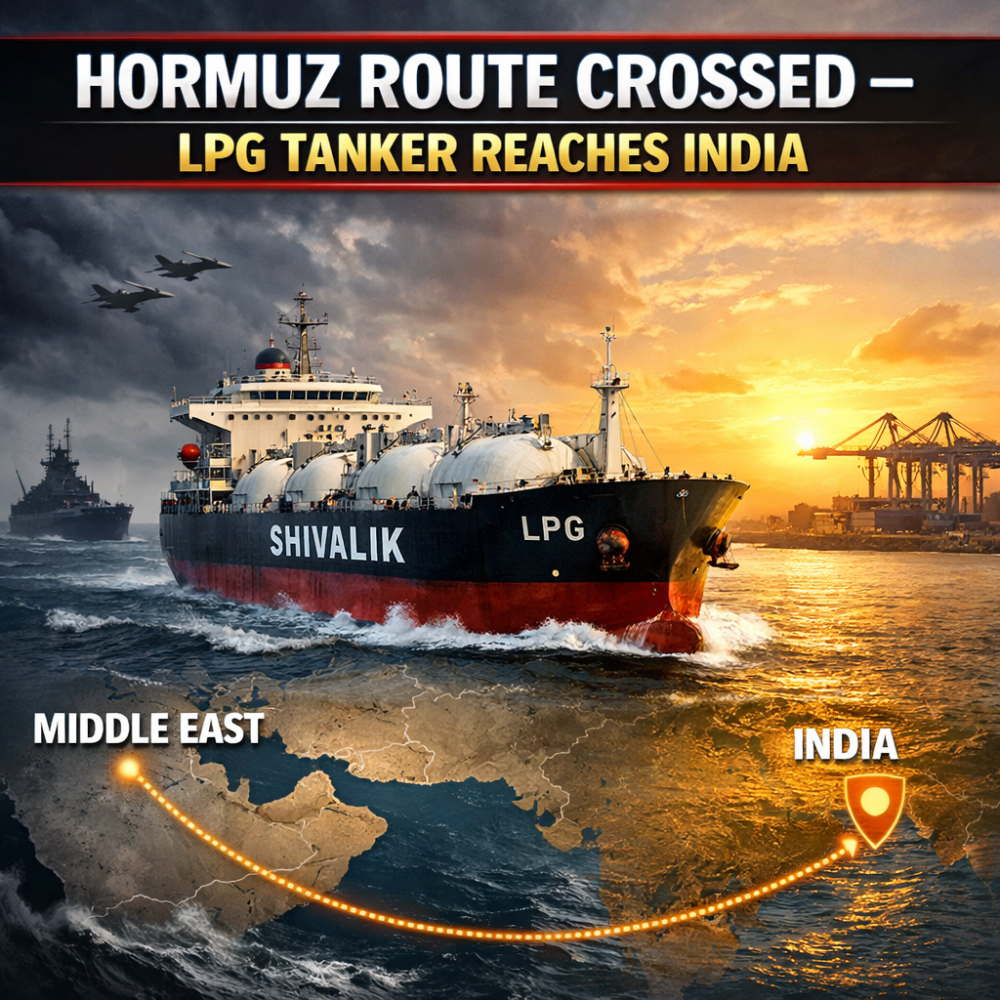
The Strait of Hormuz is one of the most important and strategic maritime routes in the world, through which a large portion of global oil and gas shipments pass. However, due to ongoing geopolitical tensions in the Middle East, particularly involving the US and Iran, the route has become increasingly volatile.
Despite these risks, the Shivalik tanker managed to cross the Hormuz route safely and complete its journey to India. The vessel carried approximately 46,000 tonnes of LPG, which is a significant volume aimed at supporting domestic consumption.
This successful transit highlights India’s diplomatic efforts and coordination with regional authorities to ensure safe passage for its energy shipments.
Importance of the Shipment for India
India relies heavily on imports to meet its LPG demand, with a large portion sourced from Middle Eastern countries. Any disruption in supply routes, especially through the Strait of Hormuz, can have a direct impact on availability and pricing.
Recent reports indicate that LPG consumption in India has been affected due to supply disruptions caused by delays and restrictions in the Hormuz region.
In this context, the arrival of the Shivalik tanker provides much-needed relief. The cargo carried by the vessel is expected to fill millions of domestic cylinders, ensuring that households do not face shortages.
Impact of US–Iran Tensions on Energy Supply
The ongoing conflict and tensions between the US and Iran have created uncertainty in global energy markets. Iran’s control over the Strait of Hormuz has led to tighter monitoring and occasional restrictions on shipping movement.
As a result, several vessels have faced delays, and some shipments have been temporarily halted. Reports suggest that multiple Indian vessels were either delayed or stranded in the region due to these tensions.
The situation has forced countries like India to adopt strategic measures, including prioritizing essential fuel supplies and exploring alternative routes and sources.
Role of Indian Shipping and Diplomacy
The successful journey of the Shivalik tanker is not just a logistical achievement but also a result of strong diplomatic engagement. India has been actively coordinating with countries in the region to ensure that its vessels can pass safely through conflict-prone areas.
In addition, Indian authorities have been closely monitoring maritime activities and maintaining communication with ship crews to ensure their safety.
The fact that the tanker crossed the Hormuz route without any major incident demonstrates the effectiveness of these efforts.
Relief for Households and Businesses
The arrival of such a large LPG shipment is particularly important for Indian households, many of which depend on LPG cylinders for daily cooking. Any disruption in supply can lead to delays in cylinder delivery and increased costs.
With the Shivalik tanker reaching Mundra Port, supply chains are expected to stabilize, at least in the short term. This will help ensure timely availability of cylinders and prevent panic among consumers.
Commercial establishments, including restaurants and small businesses, will also benefit from improved LPG availability.
Additional Shipments Expected
The Shivalik is not the only vessel making its way to India. Another LPG tanker, Nanda Devi, carrying a similar quantity of LPG, is also expected to reach Gujarat ports shortly.
Together, these shipments are expected to significantly boost LPG supply in the country and reduce pressure on existing stocks.
The arrival of multiple vessels also indicates that India is actively working to maintain a steady flow of energy imports despite global challenges.
Challenges Ahead
While the arrival of the Shivalik tanker is a positive development, challenges remain. The geopolitical situation in the Middle East continues to be uncertain, and any escalation could further disrupt shipping routes.
India’s heavy dependence on imports makes it vulnerable to such external factors. Therefore, experts believe that there is a need for long-term strategies, including diversification of energy sources and strengthening domestic production.
Strategic Importance of Mundra Port
Mundra Port in Gujarat plays a crucial role in handling energy imports for India. As one of the country’s largest commercial ports, it is equipped to manage large volumes of cargo, including LPG.
The arrival of the Shivalik tanker at Mundra highlights the port’s importance in maintaining supply chains and supporting the nation’s energy needs.
Efficient handling and distribution from the port will ensure that the LPG reaches different parts of the country without delay.
Human Aspect: Relief for Crew Families
Beyond the economic and logistical significance, the safe arrival of the tanker has also brought relief to the families of crew members who were navigating through a high-risk zone.
Reports indicate that families had been anxious about the safety of their loved ones during the journey. The successful docking of the vessel has eased these concerns and highlighted the bravery and dedication of maritime professionals.
Conclusion
The arrival of the Shivalik LPG tanker at Mundra Port marks a significant moment for India amid ongoing global tensions. Successfully crossing the Strait of Hormuz during a period of geopolitical uncertainty demonstrates the country’s resilience and preparedness in managing its energy needs.
While the shipment provides immediate relief and stability, it also underscores the importance of strategic planning and international cooperation in ensuring energy security. As global dynamics continue to evolve, India’s ability to navigate such challenges will play a key role in sustaining its growth and meeting the needs of its population.