





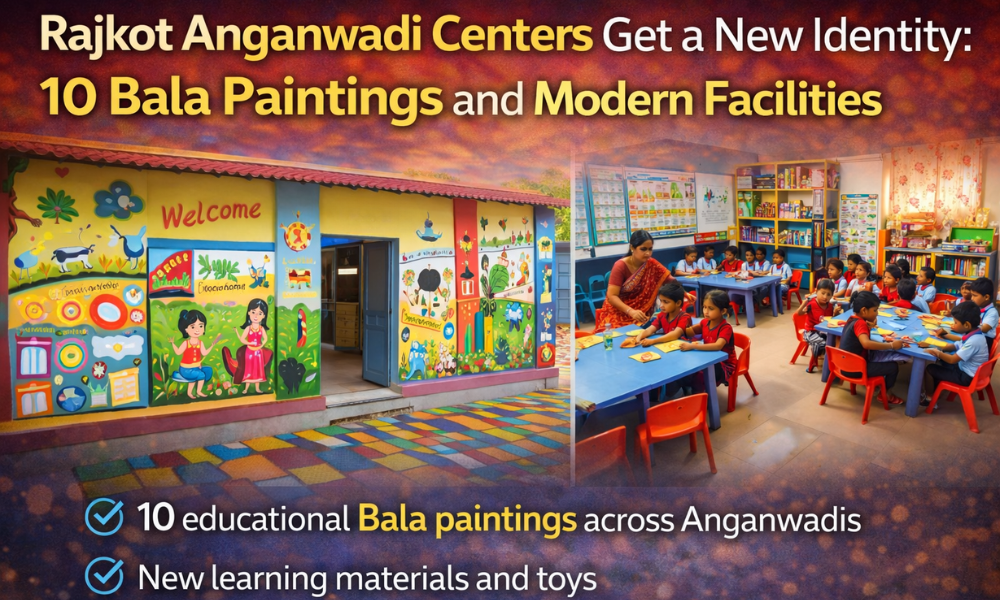
Anganwadi centers play a vital role in the foundation of early childhood care, nutrition, and education in India. Recognizing their importance in shaping young minds, Rajkot has taken a meaningful step toward transforming these grassroots institutions into more engaging, child-friendly, and modern learning spaces. Through a collaborative initiative supported by social organizations and local administration, 10 Anganwadi centers in Rajkot have been revamped with Bala Paintings and modern facilities, giving them a completely new identity.
This initiative not only enhances the physical appearance of Anganwadi centers but also significantly improves the learning environment for children aged three to six years. The colorful transformation has brought joy, curiosity, and creativity into spaces that were earlier plain and utilitarian.
A Thoughtful Initiative for Early Childhood Development
The project was undertaken with the objective of making Anganwadi centers more attractive, interactive, and conducive to learning. Bala Painting, a concept widely appreciated in early education, uses colorful illustrations, alphabets, numbers, animals, fruits, moral values, and educational themes painted on walls. These paintings help children learn naturally through visual engagement while playing and interacting with their surroundings.
In Rajkot, 10 selected Anganwadi centers were upgraded under this initiative. Each center now reflects a lively and welcoming atmosphere where children feel excited to attend daily activities. The transformation has helped shift the perception of Anganwadis from being basic welfare centers to vibrant early learning spaces.
Role of Bala Paintings in Child-Friendly Learning
Bala Paintings are more than just decorative wall art. They are designed with a strong educational purpose. Bright colors, simple illustrations, and relatable themes encourage children to observe, ask questions, and remember concepts easily. At the Anganwadi centers in Rajkot, the walls now showcase alphabets, numbers, shapes, animals, birds, seasonal themes, and social messages in a visually appealing manner.
These paintings support learning without pressure, allowing children to absorb information naturally. For first-generation learners and children from economically weaker backgrounds, such visual tools play a crucial role in building interest in education at an early stage.
Modern Facilities Added for Overall Growth
Along with Bala Paintings, several modern and child-friendly facilities have been introduced in the upgraded Anganwadi centers. These include educational toys, indoor play equipment, slides, seesaws, and other play-based learning tools that encourage physical and mental development. The centers have also been equipped with improved seating arrangements, better flooring, and safe play areas.
Such facilities ensure that children receive a balanced environment where learning and play go hand in hand. The presence of safe and engaging equipment also helps Anganwadi workers conduct daily activities more effectively.
Collaboration Between Social Organizations and Administration
The success of this initiative lies in the strong collaboration between social organizations, donors, and the local administration. With the support of volunteers and contributors, the project was implemented efficiently across different areas of Rajkot. The Anganwadi centers selected for this upgrade are located in various zones of the city, ensuring that the benefits reach children from different communities.
The administrative support ensured smooth execution, while the involvement of social organizations brought creativity, resources, and commitment to the project. This partnership model stands as an excellent example of how community participation can strengthen public welfare programs.
Positive Impact on Children and Parents
The transformation has been warmly welcomed by children, parents, and Anganwadi workers alike. Children now show increased enthusiasm in attending the centers regularly. Parents have expressed satisfaction, noting that their children are more eager to learn and participate in activities.
The cheerful environment has helped reduce absenteeism and has improved interaction between children and Anganwadi staff. For many parents, especially those from underprivileged backgrounds, the upgraded centers provide reassurance that their children are learning in a safe, nurturing, and stimulating environment.
Empowering Anganwadi Workers
Anganwadi workers play a critical role in delivering early childhood education and nutrition services. The improved infrastructure and learning tools have made their work easier and more effective. With Bala Paintings serving as teaching aids, workers can explain concepts visually, making lessons more interactive and enjoyable.
The availability of proper facilities also boosts morale among workers, motivating them to engage more creatively with children. This empowerment directly reflects in the quality of care and education provided at the centers.
Strengthening the Anganwadi System in Rajkot
This initiative aligns with broader efforts to strengthen the Anganwadi system and improve early childhood outcomes. By focusing on infrastructure, learning environment, and child-friendly design, Rajkot has set an example for other cities to follow.
The upgraded centers demonstrate that even small but well-planned changes can have a significant impact on children’s learning experiences. Such initiatives contribute to long-term goals of reducing dropout rates, improving school readiness, and fostering holistic development.
A Model for Future Expansion
Encouraged by the success of the project, there is growing hope that similar upgrades will be extended to more Anganwadi centers in Rajkot and other parts of Gujarat. Expanding Bala Painting initiatives and modern facilities across more centers can help create uniform standards of early education infrastructure.
The project also highlights the importance of sustained maintenance and periodic upgrades to ensure that the benefits continue for years to come.
Conclusion
The transformation of 10 Anganwadi centers in Rajkot with Bala Paintings and modern facilities marks a significant step toward improving early childhood education at the grassroots level. By combining creativity, community support, and administrative collaboration, these centers have gained a new identity that prioritizes learning, happiness, and holistic child development.
This initiative proves that investing in early education infrastructure is not just about buildings and equipment it is about creating environments where children feel inspired to learn, grow, and dream. Rajkot’s Anganwadi transformation stands as a shining example of how thoughtful interventions can shape a brighter future for the next generation.