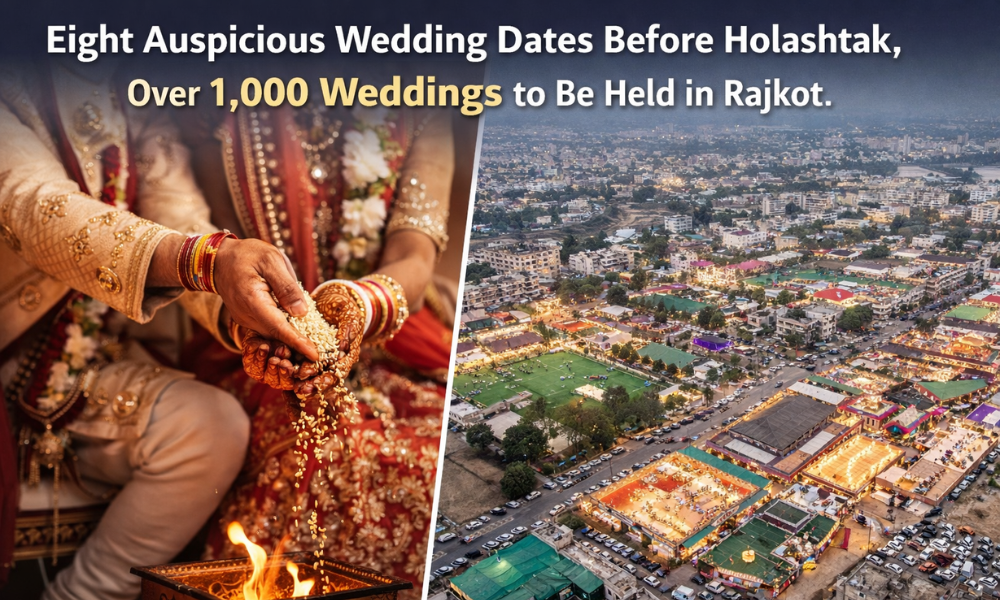
The wedding season in Rajkot is set to witness a significant surge in celebrations, with more than 1,000 marriages expected to take place before the onset of Holashtak. According to astrologers and event planners, there are eight auspicious wedding dates available during this period, leading to a heavy concentration of marriage ceremonies across the city. As families rush to finalize venues, caterers, decorators, and other services, Rajkot is experiencing a festive atmosphere ahead of the traditional pause in weddings during Holashtak.
Holashtak, the eight-day period preceding Holi, is traditionally considered inauspicious for weddings and other major ceremonies in Hindu culture. During this time, marriages are generally avoided, prompting families to plan weddings either well in advance or after the conclusion of the festival. This cultural belief has resulted in a sharp increase in wedding bookings before Holashtak begins, particularly when multiple favorable dates fall close together.
Astrologers have identified eight such auspicious dates, encouraging couples to finalize their weddings within a short timeframe. As a result, marriage halls, community centers, hotels, and open wedding lawns in Rajkot are witnessing near-full bookings. Popular wedding venues have reported reservations months in advance, leaving late planners with limited choices or higher costs.
The high volume of weddings has had a noticeable impact on the city’s economy. Businesses associated with the wedding industry—including caterers, florists, decorators, photographers, videographers, makeup artists, and event managers—are experiencing peak demand. Many service providers are handling multiple events on the same day, often deploying separate teams to meet commitments.
Jewelry stores and clothing showrooms are also benefiting from the busy season. Gold, diamond, and traditional bridal jewelry have seen increased sales, while textile shops report strong demand for bridal wear, sherwanis, and festive attire for family members. Retailers say that wedding shopping begins weeks in advance and continues until the final days before the ceremony.
The surge in weddings has also placed pressure on logistical services in the city. Transport providers offering cars, buses, and luxury vehicles for wedding processions have received a large number of bookings. Hotels and guest houses are witnessing higher occupancy as relatives and guests travel from outside the city to attend ceremonies. Traffic police have been alerted to manage congestion, particularly during evening wedding hours when multiple processions move through main roads.
Pandits and priests are among the most sought-after professionals during this period. With limited auspicious time slots available on each date, many priests are conducting multiple ceremonies in a single day. Some families have adjusted ceremony timings early in the morning or late at night to accommodate the rush and secure the presence of preferred priests.
Wedding planners note that while large-scale weddings continue to dominate, there is also a growing trend toward smaller, more organized ceremonies. Rising costs and scheduling challenges have encouraged some families to limit guest lists and focus on meaningful rituals rather than extravagant displays. However, traditional customs and community gatherings still remain central to most celebrations.
The concentration of weddings before Holashtak also reflects the enduring influence of astrology and tradition in modern society. Despite changing lifestyles and increasing acceptance of court marriages and destination weddings, many families continue to consult astrologers before finalizing wedding dates. For them, aligning marriage ceremonies with auspicious timings is considered essential for a harmonious married life.
Civic authorities are preparing for the busy period by coordinating with wedding halls and service providers. Measures such as extended electricity supply arrangements, water management, and crowd control are being planned to avoid disruptions. Municipal officials have urged event organizers to adhere to noise regulations and traffic guidelines to ensure minimal inconvenience to the public.
Residents living near popular wedding venues have mixed reactions to the surge. While many enjoy the festive environment and economic activity, others express concerns about noise, parking issues, and late-night disturbances. Authorities have advised organizers to obtain necessary permissions and follow prescribed limits to maintain balance between celebration and public convenience.
As the final auspicious dates approach, families are busy with last-minute preparations, rituals, and guest arrangements. Tailors, beauty parlors, and invitation printers are working extended hours to meet deadlines. The excitement and anticipation associated with weddings have brought a sense of joy and vibrancy to the city.
In conclusion, the availability of eight auspicious wedding dates before Holashtak has transformed Rajkot into a hub of matrimonial activity. With over 1,000 weddings scheduled, the period highlights not only the cultural importance of astrology and tradition but also the significant economic and social impact of weddings on urban life. As families come together to celebrate new beginnings, Rajkot reflects a blend of age-old customs and modern planning, marking yet another lively wedding season in the city’s cultural calendar.