





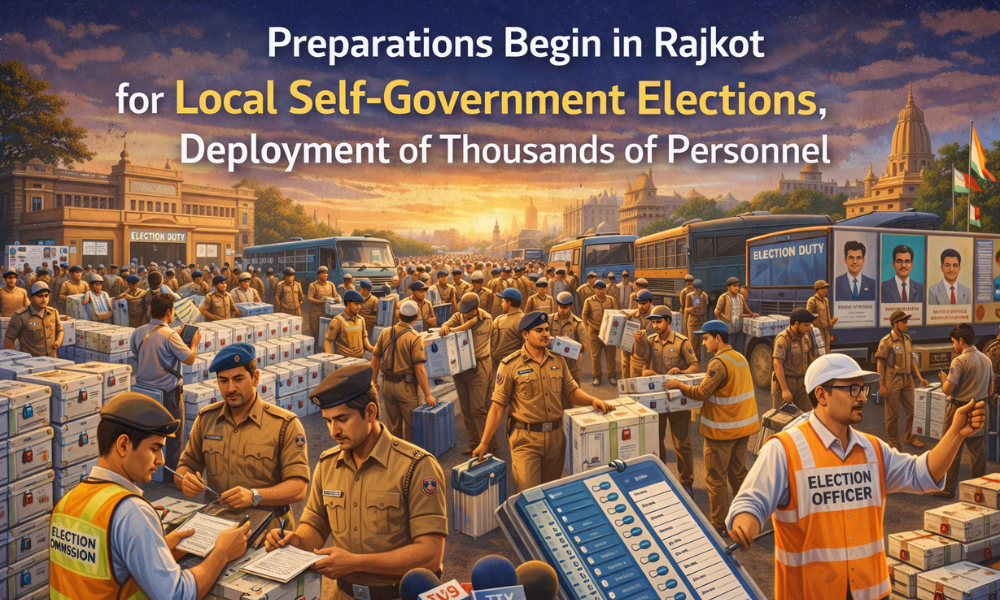
Rajkot has entered a crucial phase of administrative and political activity as preparations for the upcoming local self-government elections have officially begun. With the election process gaining momentum, government departments, election authorities, and local administrations are working in coordination to ensure that the polls are conducted in a smooth, transparent, and efficient manner. Thousands of government personnel have been deployed across the district to handle various responsibilities related to voter registration, polling arrangements, and election monitoring.
The local self-government elections, which include municipal and district-level bodies, are considered the backbone of grassroots democracy. In Rajkot, these elections play a significant role in shaping local governance, civic infrastructure, and public service delivery. Recognizing their importance, the administration has initiated comprehensive planning well in advance to avoid logistical challenges and ensure maximum voter participation.
Voter List Preparation in Final Stages
One of the most critical aspects of the election process is the preparation and revision of voter lists. The Social Intervention and Registration (SIR) division has been entrusted with the responsibility of updating electoral rolls. Officials have confirmed that extensive door-to-door verification drives have been conducted across urban and rural areas of Rajkot to ensure that eligible voters are correctly included.
Special attention has been given to first-time voters, migrated residents, and citizens who recently turned 18. Booth-level officers (BLOs) have played a key role in collecting and verifying data, while correction requests related to names, addresses, and deletions have been addressed through designated facilitation centers. Authorities believe that an accurate voter list is essential for maintaining public trust in the electoral process.
Massive Deployment of Election Personnel
To manage the large-scale operation, the district administration has deployed thousands of employees from various departments. These include staff from municipal corporations, taluka offices, education departments, and other government bodies. Personnel have been assigned duties such as polling officers, presiding officers, sector officers, and surveillance staff.
Training programs are being conducted regularly to familiarize employees with election rules, electronic voting procedures, and ethical responsibilities. Officials have emphasized that neutrality and discipline are mandatory, and strict action will be taken against any violation of election guidelines.
Technology and Transparency Measures
The administration is also leveraging technology to ensure transparency and efficiency. Digital platforms are being used for voter data management, staff allocation, and grievance redressal. CCTV surveillance is planned at sensitive polling booths to prevent malpractices, while control rooms will operate round the clock to monitor election-related activities.
In addition, helplines and online portals have been activated to allow citizens to report complaints, seek information, or check their voter status. These initiatives aim to make the election process more accessible and citizen-friendly.
Security Arrangements Strengthened
Security remains a top priority during elections. Police forces and home guards are being strategically deployed across Rajkot, especially in areas identified as sensitive or densely populated. Regular flag marches and patrolling have been initiated to maintain law and order and instill confidence among voters.
Senior police officials have stated that coordination meetings are being held with election authorities to ensure rapid response mechanisms are in place. Surveillance teams will monitor social media platforms to curb the spread of misinformation or inflammatory content that could disturb public harmony.
Political Activity Gains Momentum
With preparations underway, political parties and independent candidates have also started gearing up for the electoral battle. Party offices are witnessing increased activity as leaders hold meetings, finalize strategies, and connect with grassroots workers. While official campaigning will begin after the announcement of election dates, informal interactions and organizational strengthening are already visible.
Local issues such as water supply, road infrastructure, sanitation, public transport, and employment are expected to dominate the election discourse. Voters in Rajkot have historically shown strong engagement in local elections, making the contest both competitive and closely watched.
Focus on Voter Awareness and Participation
To encourage higher voter turnout, the district administration has launched voter awareness campaigns under various outreach programs. Posters, banners, and public announcements are being used to educate citizens about the importance of voting and the procedures involved.
Special initiatives are being planned for senior citizens, persons with disabilities, and women voters to ensure inclusivity. Authorities have reiterated that every eligible citizen should exercise their democratic right without fear or inconvenience.
Administrative Deadlines and Timeline
According to officials, key administrative deadlines related to voter list finalization and staff deployment are being strictly followed. Once the voter rolls are published, the election commission is expected to announce the official schedule, including nomination dates, campaigning period, polling day, and result declaration.
The administration has assured that all arrangements will be completed well before polling to avoid last-minute hurdles. Mock drills and internal audits are also being conducted to test preparedness at polling stations.
Conclusion
The beginning of election preparations in Rajkot marks a significant step toward strengthening local democracy. With thousands of personnel deployed, voter lists nearing completion, and security measures firmly in place, the district is gearing up for a well-organized electoral process. The coming weeks are expected to witness heightened political activity and civic engagement as Rajkot prepares to elect its local representatives.
As the city moves closer to polling day, the collective efforts of the administration, security agencies, political stakeholders, and citizens will determine the success of the local self-government elections. A peaceful, fair, and participatory election will not only reflect democratic values but also shape the future of governance in Rajkot.