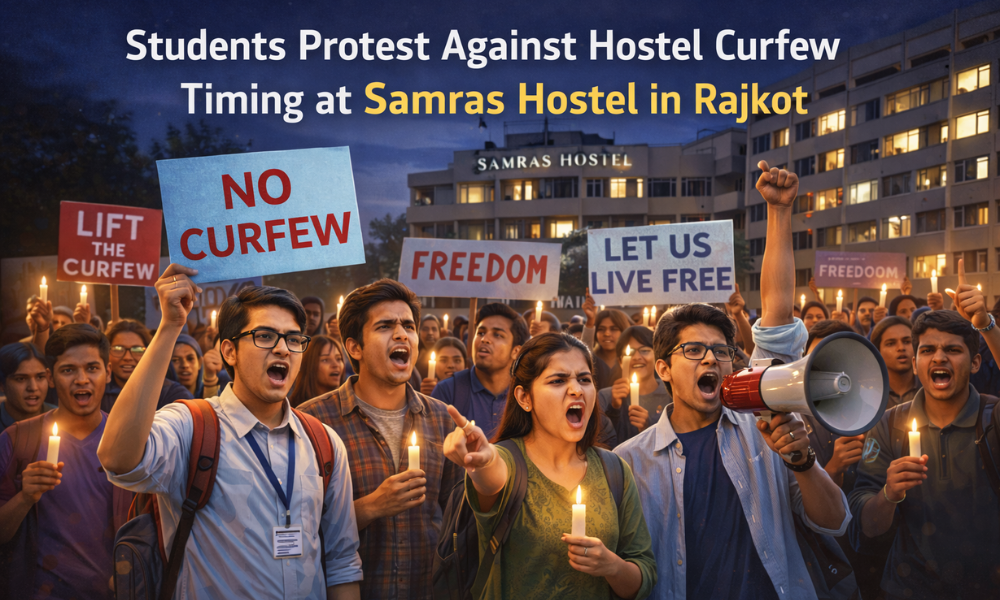
A significant student protest unfolded at the Samras Hostel in Rajkot when residents gathered in large numbers to oppose the existing hostel curfew timings. The demonstration, which took place late at night, drew attention to long-standing grievances related to restrictions imposed on students, particularly female students, regarding entry and exit timings. The protest highlighted broader concerns about student autonomy, safety, and the balance between discipline and personal freedom in educational hostels.
According to reports, students residing at the Samras Hostel came together spontaneously to voice their dissatisfaction with the hostel administration’s rules. The immediate cause of the protest was the curfew timing, which students felt was unreasonable and restrictive, especially for those engaged in academic activities, competitive exam preparation, internships, or late-evening study sessions. Many students argued that the rigid curfew did not take into account the realities of modern education and student life.
The protest gained momentum under the leadership and support of the Akhil Bharatiya Vidyarthi Parishad (ABVP). A large number of students, both male and female, assembled within the hostel premises and raised slogans demanding a revision of the curfew rules. The atmosphere was charged but largely peaceful, with students expressing their concerns through collective slogans and discussions rather than violence or vandalism. Their primary demand was simple: an extension of the hostel entry time so that students could manage their academic and personal responsibilities more effectively.
One of the key issues raised during the protest was the disparity between the expectations placed on students and the facilities provided to them. Students pointed out that while they are encouraged to excel academically and participate in various educational and co-curricular activities, restrictive hostel rules often become an obstacle. For students preparing for competitive examinations or attending evening coaching classes, the current curfew timings make it extremely difficult to balance their schedules without constant anxiety about penalties or disciplinary action.
Female students, in particular, emphasized that early curfew timings are often justified in the name of safety but, in reality, end up limiting their freedom more than addressing genuine security concerns. Several protesters argued that instead of imposing strict curfews, hostel authorities should focus on improving security infrastructure, such as better lighting, surveillance systems, and the presence of trained security personnel. They stressed that empowerment and safety should go hand in hand, rather than one being used as an excuse to curtail the other.
As the protest continued, discussions reportedly took place between student representatives and hostel authorities. According to available information, the hostel administration cited logistical and safety-related reasons for maintaining the existing curfew timings. Officials expressed concerns about managing large hostel populations late at night and ensuring the safety of residents. However, students countered these arguments by stating that many other hostels and educational institutions across the state and country have adopted more flexible policies without compromising security.
The protest also brought to light a larger issue faced by students living in government-run or subsidized hostels. Often, such hostels follow outdated rules that have not evolved with changing educational patterns and societal norms. Today’s students are more mobile, academically engaged, and socially aware than ever before. They attend seminars, workshops, library sessions, and study groups that frequently extend beyond traditional hours. In this context, rigid curfew rules appear increasingly disconnected from students’ real needs.
Another important aspect of the protest was the sense of unity displayed by the students. Despite differences in academic streams, years of study, and personal backgrounds, the residents of Samras Hostel came together over a common issue. This collective action underscored the growing awareness among students about their rights and the importance of dialogue with authorities. Many students stated that the protest was not against discipline itself, but against rules that feel arbitrary and unresponsive.
Late-night protests often raise concerns about law and order, but in this case, there were no reports of major disturbances. The students reportedly remained within the hostel premises and avoided blocking public roads or causing inconvenience to local residents. This restraint helped keep the focus on the issue at hand rather than allowing the protest to be dismissed as disruptive behavior. Observers noted that the students were keen on being heard and taken seriously, rather than creating chaos.
The involvement of student organizations like ABVP added a political and organizational dimension to the protest. Supporters argued that such organizations play a crucial role in amplifying student voices and ensuring that their demands reach higher authorities. Critics, however, cautioned against excessive politicization of student issues. Regardless of these differing views, it was clear that the protest succeeded in drawing public attention to the curfew issue and putting pressure on the hostel administration to respond.
From an administrative perspective, managing large hostels is undeniably challenging. Authorities must consider safety, discipline, and resource constraints. However, experts in education management often argue that rules should be flexible, transparent, and periodically reviewed. Engaging students in the decision-making process can lead to more practical solutions that are acceptable to both sides. For example, instead of a uniform curfew, differentiated timings based on academic needs or prior permission systems could be explored.
The Samras Hostel protest reflects a broader shift in student attitudes across India. Students today are more willing to question rules that they perceive as unfair or outdated. They are also increasingly using peaceful protest and collective dialogue as tools to demand change. This trend indicates a healthy democratic spirit within educational spaces, provided it is met with openness and responsiveness from authorities.
In conclusion, the protest against hostel curfew timings at Samras Hostel in Rajkot was not merely about staying out later at night. It was a manifestation of deeper concerns related to student autonomy, gender equality, academic freedom, and modern educational needs. While safety and discipline remain important, they must be balanced with trust and flexibility. The outcome of this protest, whether immediate or gradual, has the potential to influence hostel policies not only in Rajkot but across the state. Ultimately, constructive dialogue between students and administrators will be key to creating an environment that is both secure and supportive of students’ growth.